


What is an NFT?
In plain words
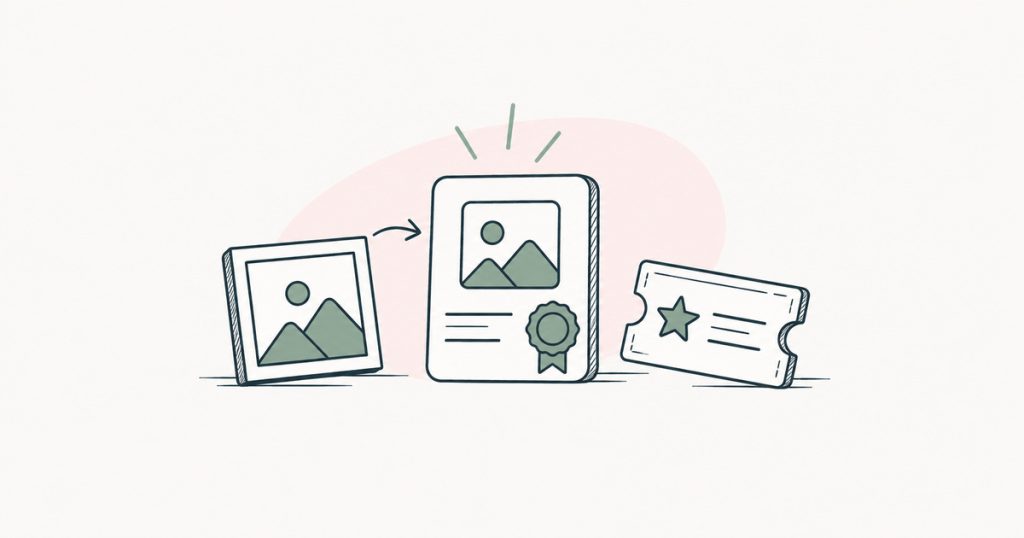
Ordinary coins are fungible: your one USDT is no different from mine, like two identical banknotes. An NFT is the opposite, it is non-fungible. It is a record on the blockchain that a specific unique token is assigned to a specific address. What matters is that this is a record about the token, not that you own the depicted item itself or the rights to it. Each NFT is named and not equal to another.
To be honest about the skepticism. What you most often hear about NFTs is the same thing — people pay thousands for a link to a picture. The picture itself, though, usually sits not in the blockchain but on an ordinary server, with only a link to it written into the blockchain. If the file on that server is swapped, the picture “changes” in the NFT too, since the record still points to the same link, and that is where the absurdity is. The mechanism itself, a practically unforgeable record of who owns something unique, is perfectly viable when used sensibly. It can run, for example, a registry of ownership, where the right to a home or a document is backed by a record in the blockchain. The absurdity is not in the technology, but in part of what it has been applied to.
Technically an NFT is a token, only a unique one, and the article what is a token is about tokens. Most often an NFT runs on Ethereum.
Deeper
What an NFT really proves, and what it does not
An NFT proves exactly one thing: this specific token belongs to this specific address, it is visible to everyone, and such a record is hard to forge.
But on its own an NFT does not prove that the picture is physically yours, that the copyright is yours, or that it is worth anything at all. Owning the token and owning the image or the rights to it are different things. Always look at what exactly the record fixes.
Two different NFT uses, often confused
The first use is art and collectibles. Unique items as a collection, for example CryptoPunks. The value here is cultural and by agreement, much like collectible stamps.
The second use is utilitarian. Here an NFT is a function, not a picture. For example, a name-address instead of a long wallet address, which the article ENS (.eth name) is about, or a ticket, or access to something. The value here is in the use, not in the image.
NFT risks
The main risk is scams and fakes. There can be any number of copies of one and the same picture, because what is unique is not the picture but the record on the blockchain. So before buying, check the collection’s official contract address and do not trust the image or a familiar name alone, since both cost nothing to copy. How to recognize fakes and traps in general is covered in the article phishing and scams.
The second risk is the price. It is very volatile and often rests on fashion alone, so put into an NFT only what you are ready to lose.
Should you write NFTs off
As a fad for expensive pictures, NFTs may well fade. The tool itself will not go anywhere, and as crypto adoption grows it will most likely get a second life — no longer as pricey pictures, but as a clear way to prove that something unique belongs to you: a document, a right to a home, a ticket, or a name.