


What is a token in crypto?
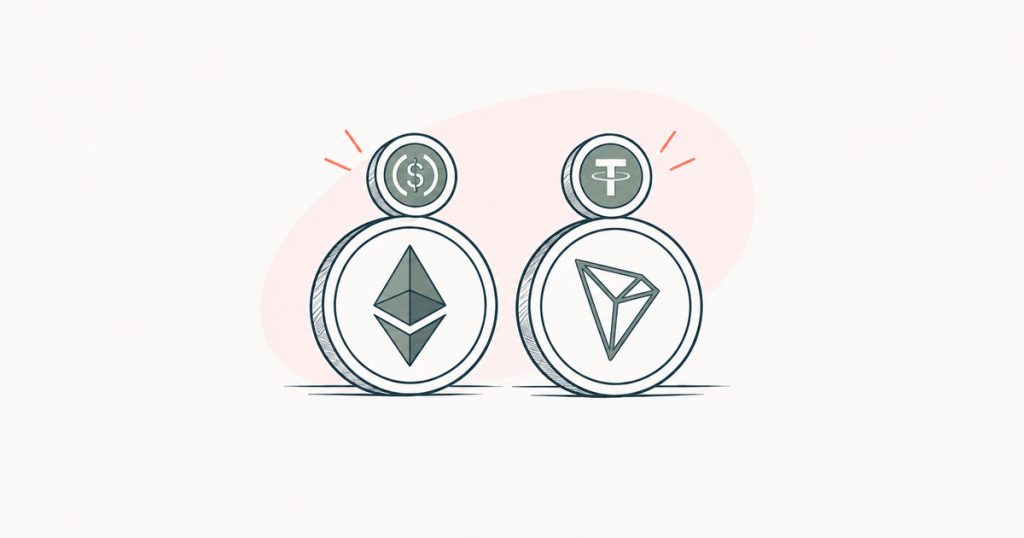
In plain words
A token is a crypto asset that has no network of its own. It is issued on top of someone else’s blockchain and usually works through a small program inside that network, called a smart contract, which the article smart contract is about. On some networks tokens are issued by the network’s own built-in features, without a separate program. That is what sets a token apart from a network coin, such as Bitcoin or Ethereum, which has a chain of its own.
Picture it like this: a blockchain network is a bus with a driver, and a token is a passenger. You pay the fare by the rules of whichever bus you board, since each network has its own coin for payment and its own rules. The bus runs even with no passengers: the network works fine on its own. A passenger, however, gets nowhere without the bus and its driver — a token has no network of its own and depends entirely on the one it was issued on.
Why does it matter to you? Most new crypto assets are exactly tokens. Once you understand the difference, you immediately see which network a token depends on, and, for example, which coin you pay the fee in to move it. The article what is gas is about that fee.
Deeper
A token runs on someone else’s network and follows its standards
Tokens are issued to the common standards of the network they run on. On Ethereum that standard is ERC-20, on Tron it is TRC-20, on BNB Chain it is BEP-20, on Solana it is SPL. A standard here is a shared format, thanks to which wallets and exchanges can all handle the token the same way.
The practical consequence is simple: to send a token you usually need the coin of its network for the fee, which the article how to send crypto covers. The token itself also depends on its network: the network’s outages and its rules affect the token too.
Tokens are very different, but they are one class
The word token hides very different things. Some grant voting rights in a project. Others open access to a service. Others wrap another coin so it can travel across a foreign network, for example wrapped Bitcoin. Others are meme tokens with no promised use at all. All of these are one class with different properties, not separate kinds of thing. A stablecoin, by the way, is also most often a token. It runs on one or several networks and holds a stable price, and the article what is a stablecoin is about it.
A token guarantees nothing on its own
The ease of issuing has a flip side. Almost anyone can create a token, and a token’s mere existence promises neither usefulness nor value. Look at what the token is responsible for and who stands behind it, not at a pretty name. This ties directly to how you spot empty shells and fraud, which the article phishing and scams covers.