Cash
- Pro: no internet or bank needed
- Pro: no one sees or blocks it
- Con: can only be handed over in person
- Con: easy to lose, loses value as prices rise
Cryptocurrency is digital money, that is, something valuable that you can own and pass to another person, and it exists only in electronic form. This money is not issued by any state, no government obliges sellers to accept it, and it is run not by a bank but by a shared network of computers that keeps the record of who holds how many coins.
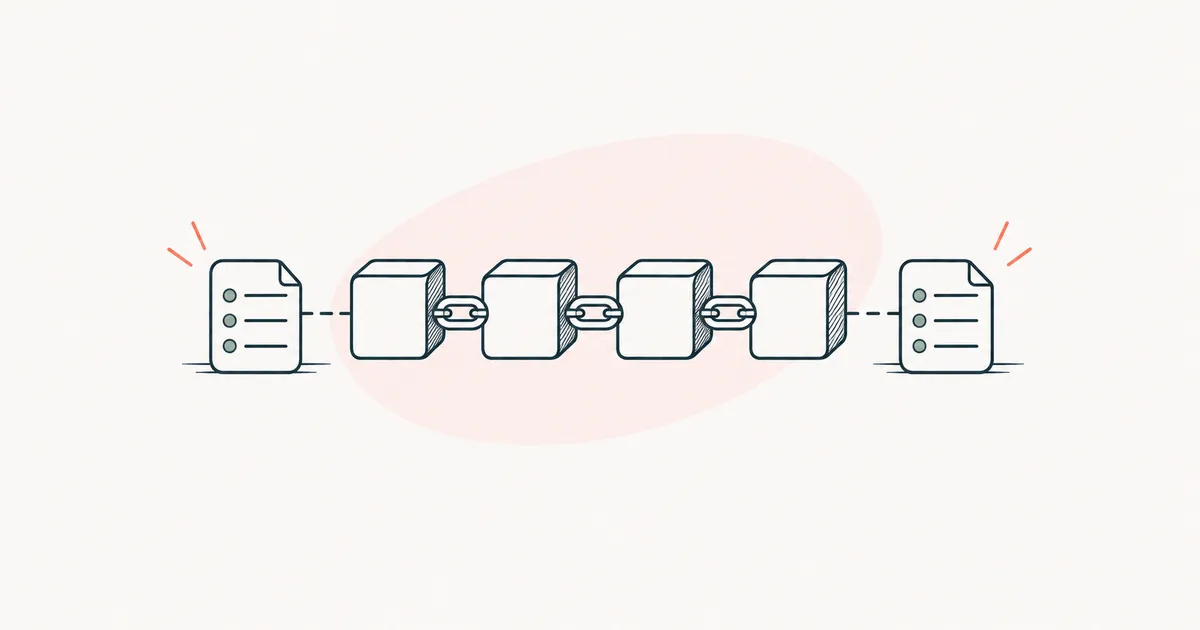
To see the principle, compare cryptocurrency with money in a bank account. Money in an account is a record in the bank's database, while cryptocurrency is a record in a shared "notebook" called the blockchain. The difference is who controls that record. With a bank the bank itself decides, it sees the transfer and can approve, delay or reverse it. On a blockchain there is no single controller, the record is kept and cross-checked by thousands of participants at once, so no one can single-handedly reverse your transfer or quietly rewrite the record.
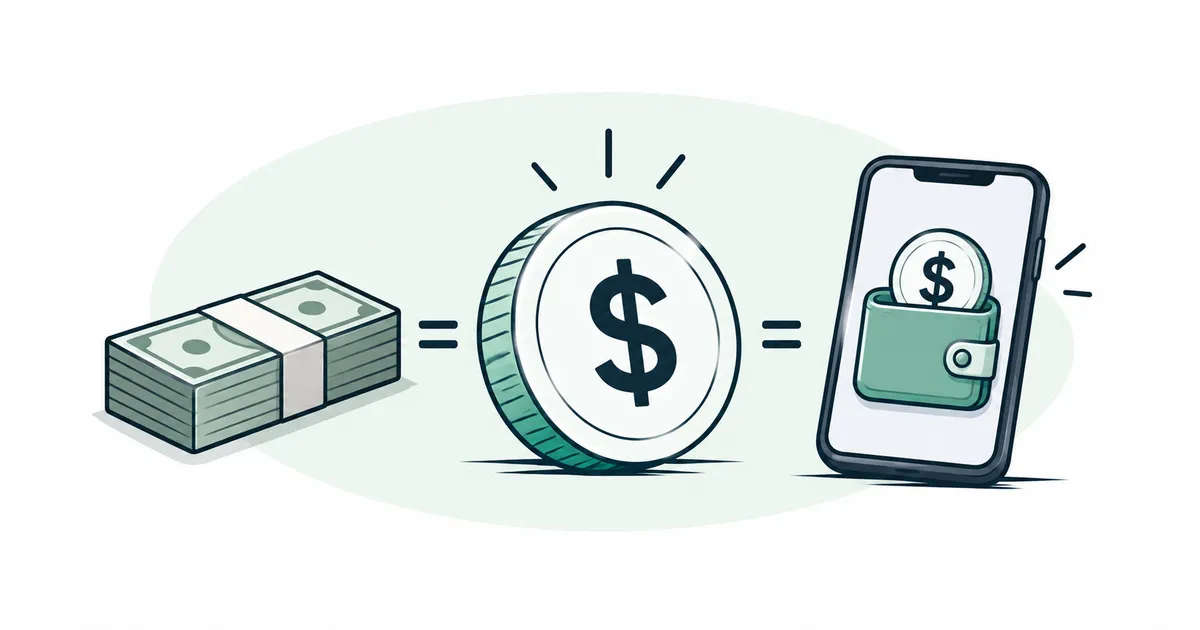
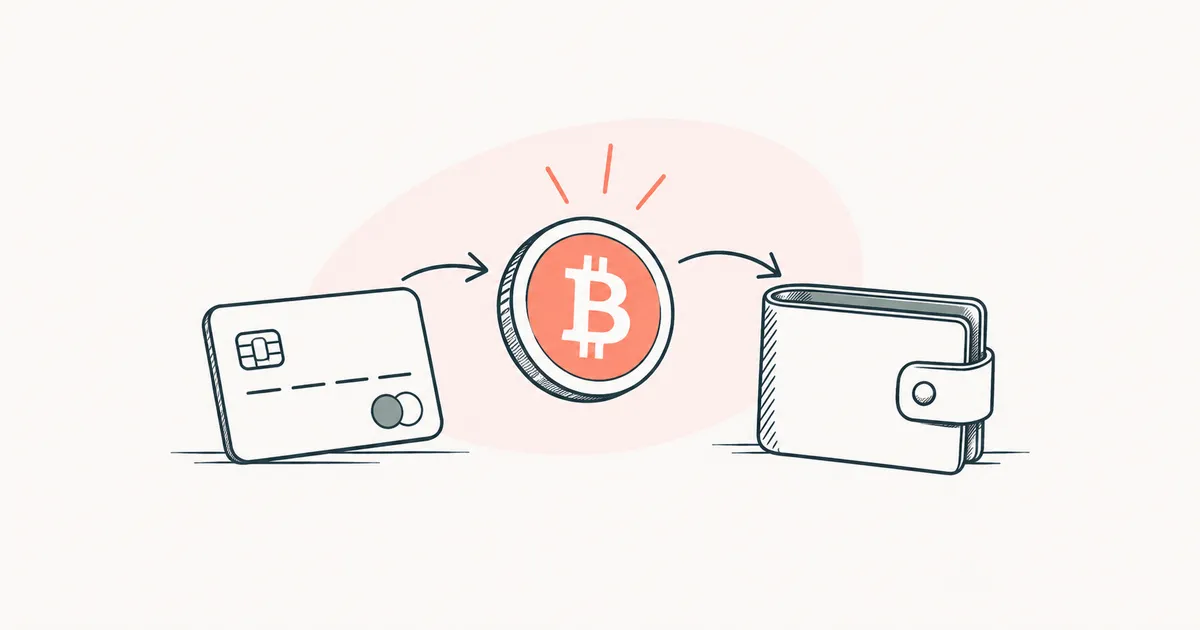
What cryptocurrency shares with cash is that it passes from hand to hand without anyone's permission, and the sender can't take it back. From card money it takes something else, the ability to send a transfer over the internet to anywhere in the world. Put simply, it is like cash you can send over the network. How exactly it resembles familiar money, and how it differs, is shown by the blocks below.
The fact that no one approves a transfer has two sides. Since there is no one to approve it, there is no one to forbid it either, and that is the freedom. Since there is no one to reverse it, a mistake can't be undone and access can't be restored if you lose the key, and that is the responsibility. Freedom here always comes paired with responsibility.
Why does this matter to you? The ability to work without a middleman, outside bank hours and borders, helps where banks are slow, expensive or unavailable, for example sending money to family abroad, saving as the local currency weakens, or getting paid for freelance work. Don't take this too literally, as "always and everywhere", because you still need the internet and a working network, and different countries have their own legal restrictions.
The first cryptocurrency was Bitcoin, and its creator described the idea simply — as electronic cash, a way to send money directly from one person to another, without a middleman1. The "digital gold" label was attached later and conveys a later interpretation rather than the original intent. How the network itself works is covered by the profile Bitcoin.
This shared record-keeping is handled by the blockchain, a shared ledger a copy of which many participants hold at once, so a record in it cannot be quietly forged. Exactly how thousands of strangers agree on which record is true is covered by the article what is consensus. You don't need to trust a single bank with this setup, because the whole network checks the record.
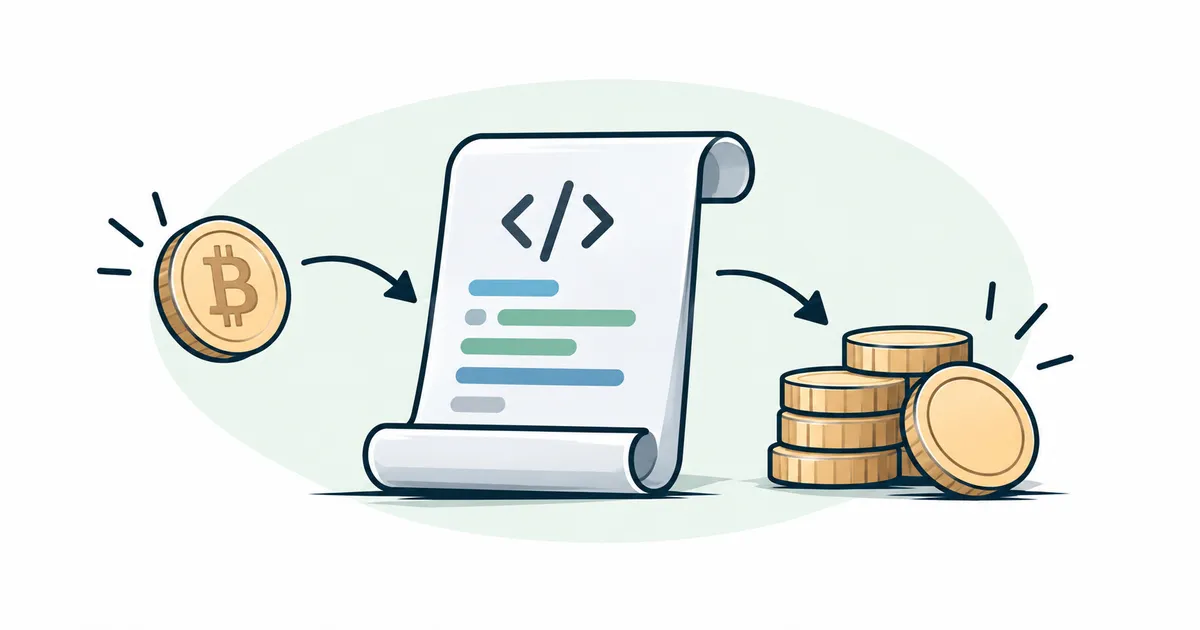
New coins appear not by a central bank's decision, but by rules written into the network's code when it launched. Bitcoin, for example, has a hard cap of 21 million coins1. These coins go to miners and validators as a reward for keeping the network running. Tokens are a separate story, issued by projects on top of someone else's network, which the article what is a token covers, while the issuance mechanism itself is explained in the article what is issuance. No one can "switch on" issuance at will, yet there is also no guarantor answering for this money.
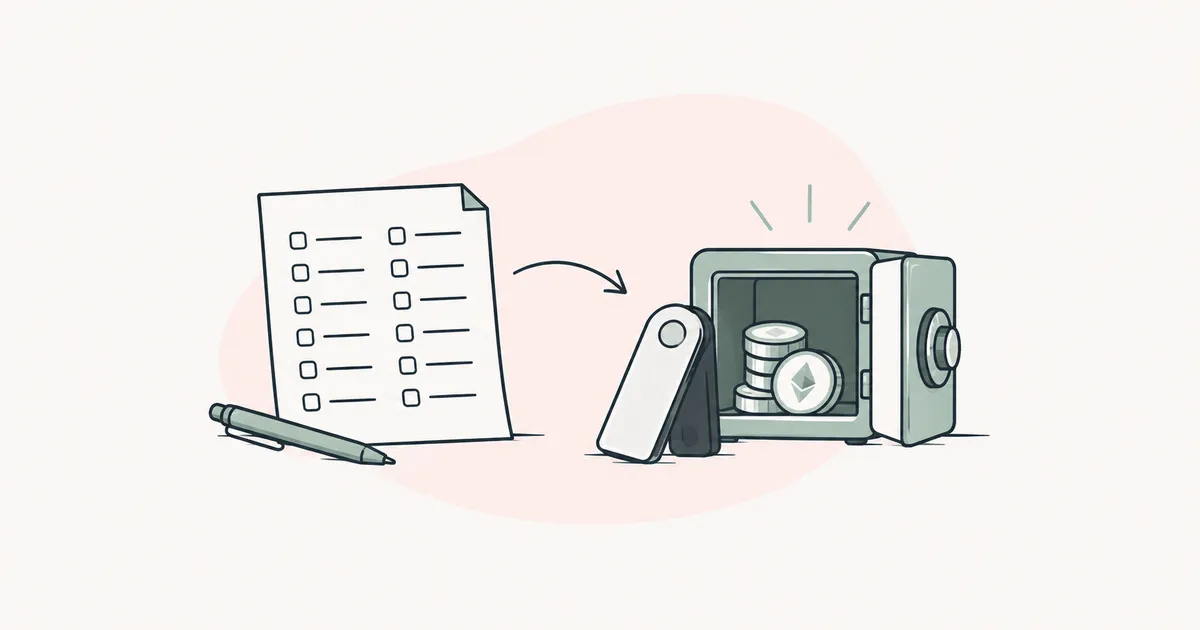
It helps to understand where coins actually "sit", and the answer is nowhere, because a coin is just a record in the network of which address holds how much. A wallet app keeps not the coins themselves but a secret key that proves you are the one entitled to dispose of that record. In case you lose the phone there is the seed phrase, a backup key made of a set of words that the wallet can be restored from. Where to keep the key, in a "hot" or a "cold" wallet, is covered by the articles hot and cold wallet and how to store crypto. Whoever has the key controls the money, which is why losing the key means losing the money.
Cryptocurrency blends traits of all three familiar ways to hold money. With cash it shares passing from hand to hand without a middleman. From card money it takes the ability to send a transfer over a distance. It has in common with gold that the amount of many coins is set not by people's decisions but by an outside rule: nature for gold, the network's code for a coin. Stablecoins and tokens work differently, issued by a company or a project. Every convenience has a flip side, and it shows clearly in the blocks below.
| Cash | Card | Gold | Crypto | |
|---|---|---|---|---|
| Need a bank's approval to send? | no | yes | no | no |
| Can you send it abroad? | no | yes | no | yes |
| Works 24/7? | yes | varies | no | yes |
| Can a transfer be reversed? | no | varies | no | no |
| Can lost access be restored? | no | yes | no | no1 |
| Who sees your payments? | no one | bank | no one | all2 |
| A country's official money? | yes | yes | no | no3 |
Cryptocurrency gives freedom, like cash, only over a distance, and like cash it does not forgive mistakes.
"I bought crypto" sounds too vague, because coins are made for different tasks, and the main kinds are shown below.
Meme tokens and NFTs are not among the cards. An NFT is not a currency at all, and meme tokens are a high-risk cryptocurrency with no backing and no clear value of any kind. So what matters is not to "buy crypto" in general, but to understand which coin you are taking and why.
The price is set by supply and demand on the market, no one guarantees it, so it can change sharply. "Stable" in a stablecoin doesn't mean "guaranteed" either, such coins try to hold their price using reserves, but even that doesn't always work, and sometimes the price breaks away from its peg, which is called a depeg. The current price of any coin is looked up on aggregator sites that collect prices from many exchanges, for example coinmarketcap.com.
Since this money has no guarantor-issuer, no one holds its price for you either.
The network works without borders, and each country has its own laws. Most often you can own cryptocurrency and exchange it, but you can't pay with it everywhere, because it is recognized as legal tender almost nowhere, and in many countries the income from it is taxed. What exactly is allowed in your country is on the country pages Brazil, Kazakhstan and Argentina, and in the article how to handle crypto taxes.