Hot vs cold crypto wallet — what's the difference?
Hot and cold wallets in plain words
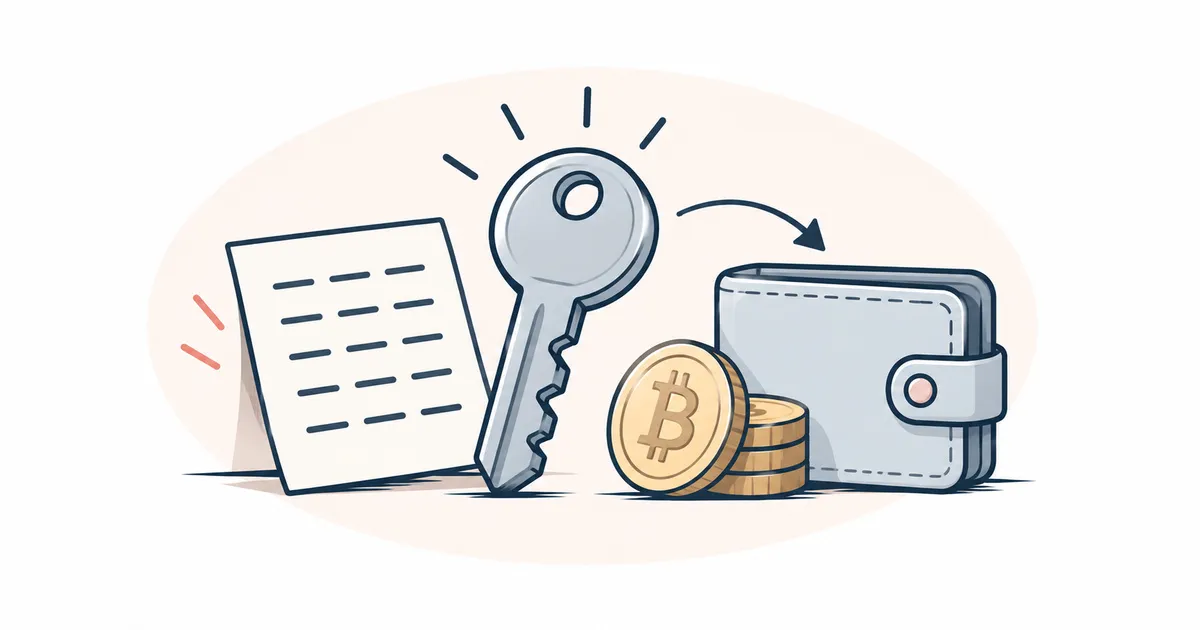
Crypto is recorded on the blockchain, and the wallet holds the private key that lets you control it1. The article what is a private key explains what a key is and why it is never shown to anyone.
Hot hot wallet and cold cold wallet wallets differ in the answer to one question: can someone reach the key over the internet. A hot wallet makes transfers easier but is easier to attack online, while a cold one is generally better protected from such attacks2.
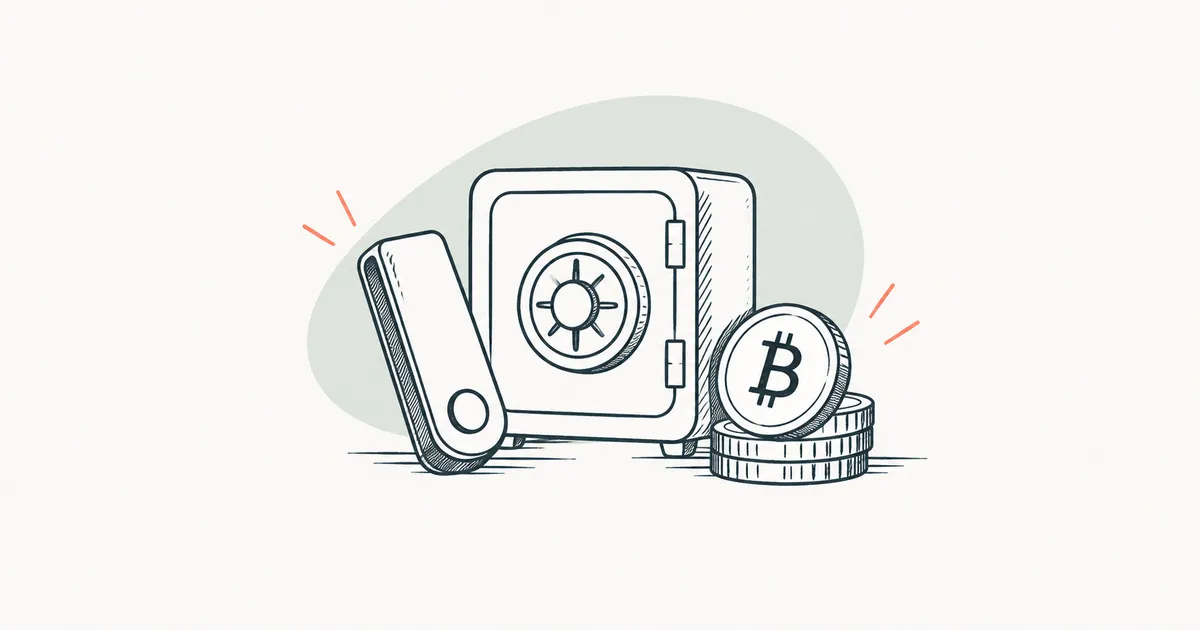
A hot wallet is like the wallet in your pocket: the money is always at hand, which is why you do not carry all your savings with you. A cold wallet is like a safe at home: it takes longer to open, and that is where the bulk of your money stays.
Whether the connection is switched on right now makes no difference. A phone in airplane mode is still a hot wallet, because the key sits in the same app, and that app goes online as soon as you turn the connection back on.
How a hardware wallet signs a transfer
A hardware wallet hardware wallet is a small device with its own screen and buttons that you plug into a phone or computer only when you need to send a transfer. The program on the computer puts the transfer together and passes it to the device. The device signs the transfer inside itself and returns the finished signature, while the key itself never leaves the device. The signed transfer is then sent to the network by the computer or phone3.
This is how an accountant works who never takes the company stamp out of the office. People bring a document, the accountant reads it, stamps it and hands the paper back, and the stamp stays in the desk drawer.
The document has to be read on the screen of the device itself. A virus on a computer or phone can change what you see on their screen, including an address you copied, the number of the recipient's "account" on the network, while the screen of the hardware wallet shows the transfer the device will actually sign4. That is why the recipient's address and the amount are checked on the hardware wallet's screen before every confirmation.
How a hot wallet, a cold wallet and an exchange account differ
| Hot wallet | Cold wallet | Exchange account | |
|---|---|---|---|
| Only you have the key? | yes | yes | no |
| Key sits on an online device? | yes | no | varies |
| Transfer checked on a separate screen? | no | yes | no |
| Access restored with a seed phrase? | yes1 | yes1 | no |
| Support can restore access? | no | no | yes |
| You need to buy a device? | no | yes | no |
- If the wallet gave you a seed phrase when it was created. Wallets without a seed phrase have their own recovery method, described in their instructions. ↩
Is an exchange account a hot wallet?
No, an account on a crypto exchange does not count as your wallet, hot or cold. The exchange controls the keys, and in your account you see only your balance. Coinbase, for example, holds the keys to its customers' wallets itself and keeps most of the crypto with no internet connection5. How the exchange splits funds between its hot and cold wallets is out of your hands. What matters to you is the risk of the exchange itself: if it is hacked, shuts down or goes bankrupt, you may lose access to your crypto2.
Which wallet to choose for the amount and how often you use it
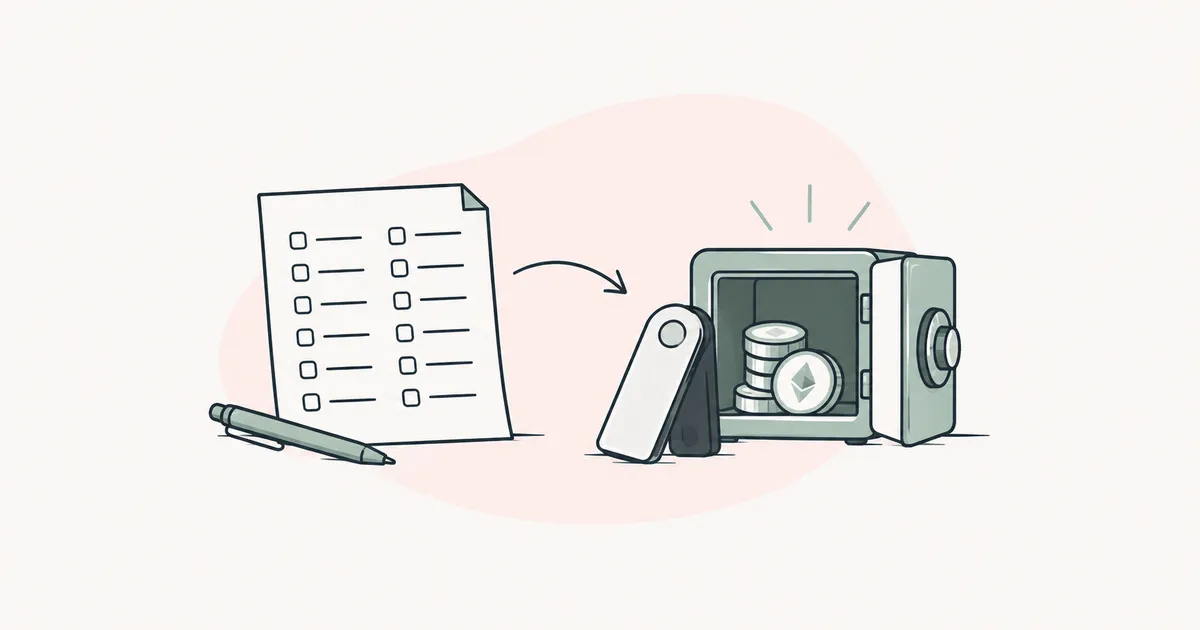
The choice depends on two things: how often you spend or send crypto and how hard it would be for you to lose it. When you need both, the crypto is split between two wallets.
Before buying a hardware wallet, check whether its screen shows the full address and amount of a transfer, whether access can be restored with a standard seed phrase on another device, and where the maker itself sells it. The article how to choose a crypto wallet covers the general features used to compare any wallets, and the guide how to store crypto explains step by step how to set up a wallet and move crypto to it.
At what amount do you need a hardware wallet?
There is no amount that fits everyone; each person sets the threshold for themselves. There are two reference points: an amount whose loss would seriously hurt your budget, and how long you are putting it aside for. The device for a cold wallet usually has to be bought2.
While you hold less crypto than that, or about the same, it makes sense to start with a hot wallet and not keep more on it than you need. When your savings have grown so much that losing them would be a disaster, and you do not plan to spend them in the coming months, they are moved to a cold wallet.
Can you use one seed phrase for a hot and a cold wallet?
Technically, one seed phrase can be entered both into a hardware wallet and into a phone app if both follow the same standard (what is a seed phrase), yet then the cold wallet loses its point. By entering the phrase into the app, you move the key to your savings onto the phone, which makes it hot. That is why hardware wallet makers ask you to enter the seed phrase only on the device itself67. For the hot wallet, set up a separate seed phrase created by the app itself.
Risks of hot and cold wallets
Theft from personal wallets is common: for 2025, the analytics company Chainalysis counted about 158,000 such thefts8. Hot and cold wallets have different weak spots.
Risks of a hot wallet
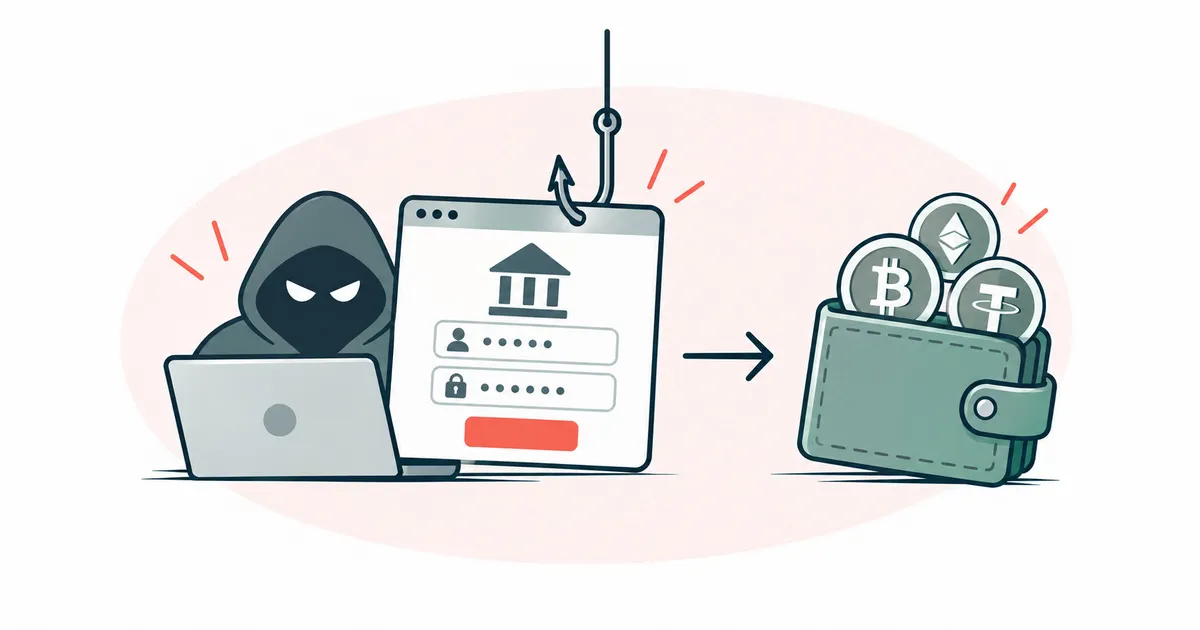
- Malware (a virus) on a phone or computer can steal the key or swap an address you copied. Fake copies of wallet apps can look very much like the real ones6, so install the app only from the official app store or from a link on the developer's official website. The article phishing and scams explains how such fakes are spotted.
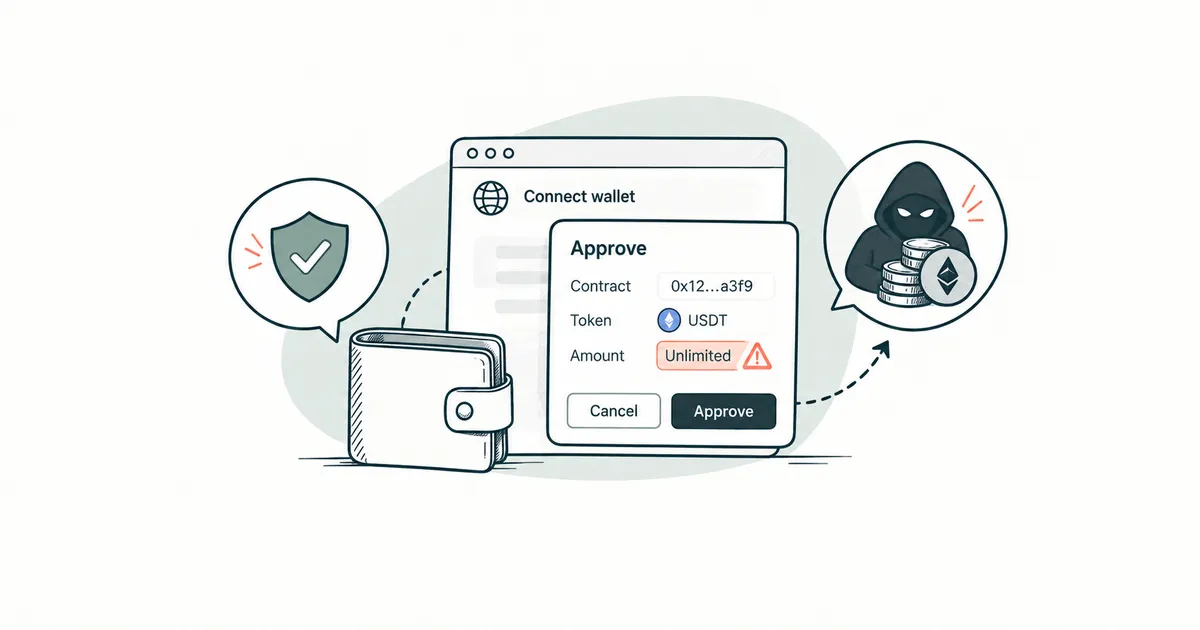
- A hot wallet is usually the one connected to sites and apps, and one careless signature on a site can give that site the right to withdraw your tokens, such as USDT. The article wallet connection safety explains what to check before signing.
- After a phone is stolen or lost, access to the crypto is restored on a new phone with the seed phrase, if you have it written down.
Risks of a cold wallet
- A fake hardware wallet can look identical to a real one, and crypto has already been stolen from such devices: instead of a random seed phrase, the fake produced one of several phrases the scammers knew in advance9. So buy the device from the maker or its official reseller. Makers advise against buying it second-hand or from third-party sellers on marketplaces1011.
- Signing without looking is dangerous because the device signs whatever you confirmed, even if the computer screen showed a different transfer. In February 2025, about 1.5 billion dollars was taken this way from a cold wallet of the Bybit exchange12. Staff confirmed the transfer through a website that showed them an ordinary operation, and at the final confirmation nobody checked the data shown on the device13.
- A leaked seed phrase opens the crypto without the device, so its written record is guarded as carefully as the device itself.
- If the device breaks or is lost, you restore access with the seed phrase on a new hardware wallet3. If the device was stolen and you are not sure the seed phrase is safe, the crypto is moved to a new wallet with a new seed phrase.