


Storing and wallets
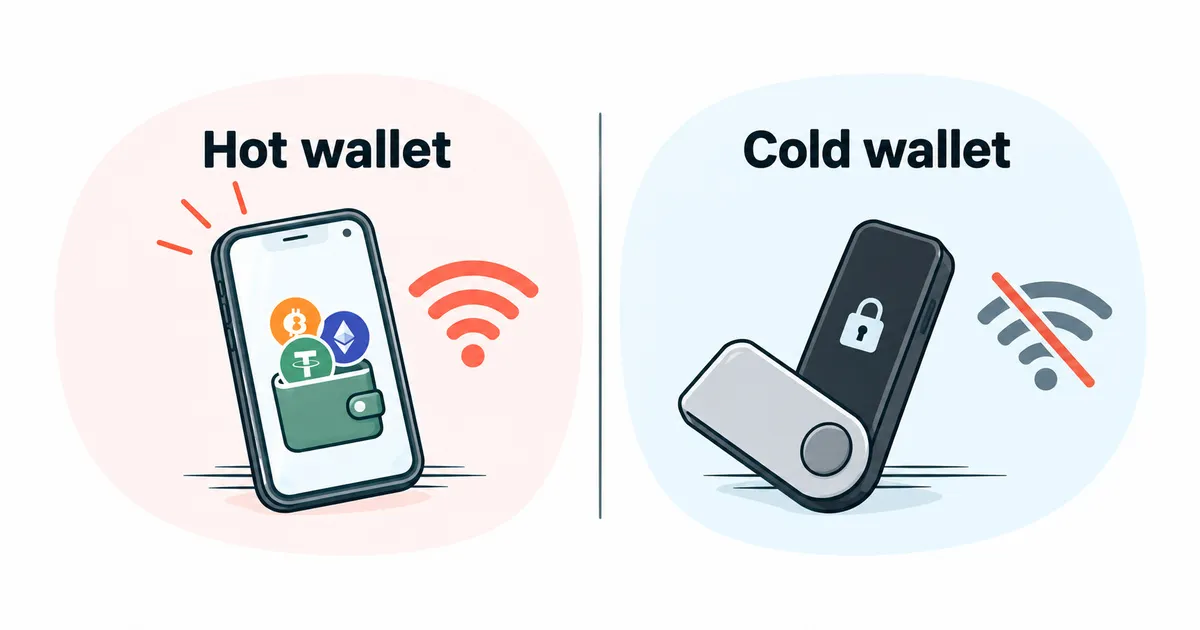 Hot vs cold crypto wallet — what's the difference?
Where a hot and a cold wallet keep the key, how a hardware wallet signs a transfer, which one fits your amount and what a cold one can't protect you from.
Security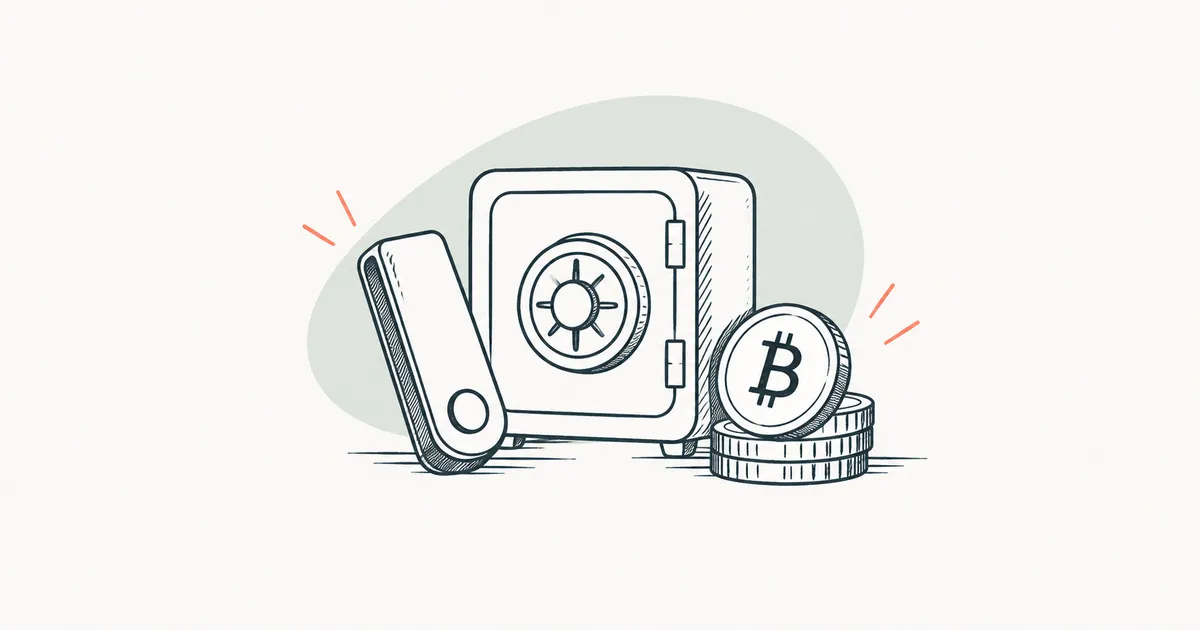 How to store crypto — hot and cold wallets
Store crypto step by step: choose an exchange or your own wallet, pick the wallet type, write down the seed phrase, and make a test transfer.
Choosing a wallet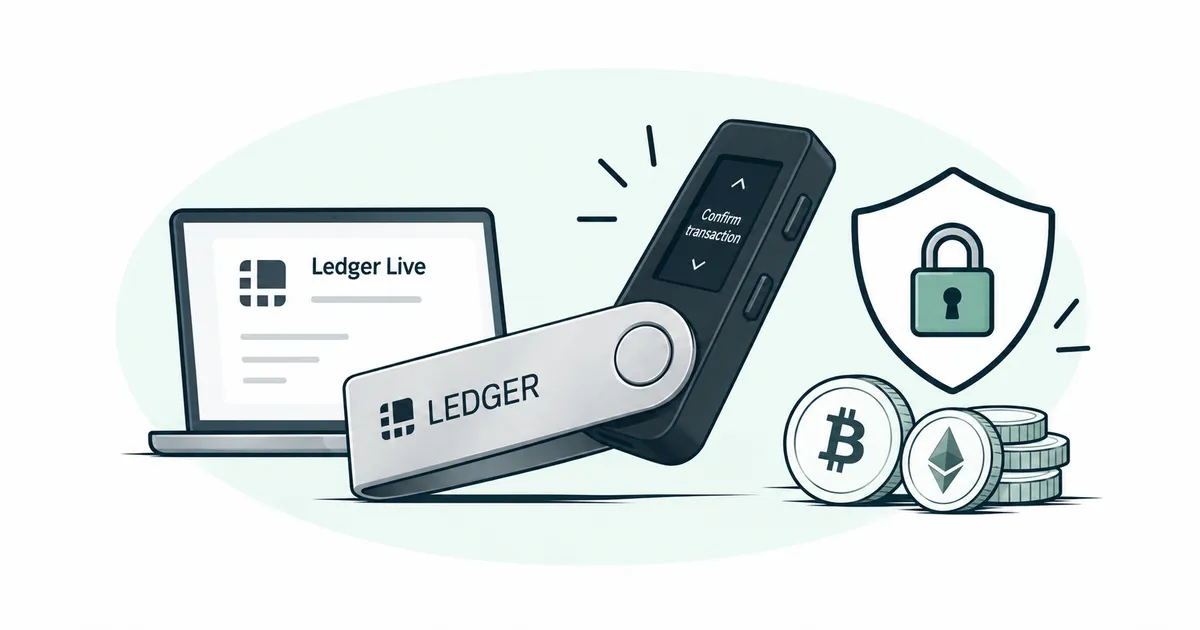 Ledger — a review of the hardware wallet, its security and risks
A hardware (cold) wallet: keys offline, every send confirmed on the device itself. The offline key reduces the risk of remote theft. This type is usually chosen for savings; paid and less convenient for everyday use.
Security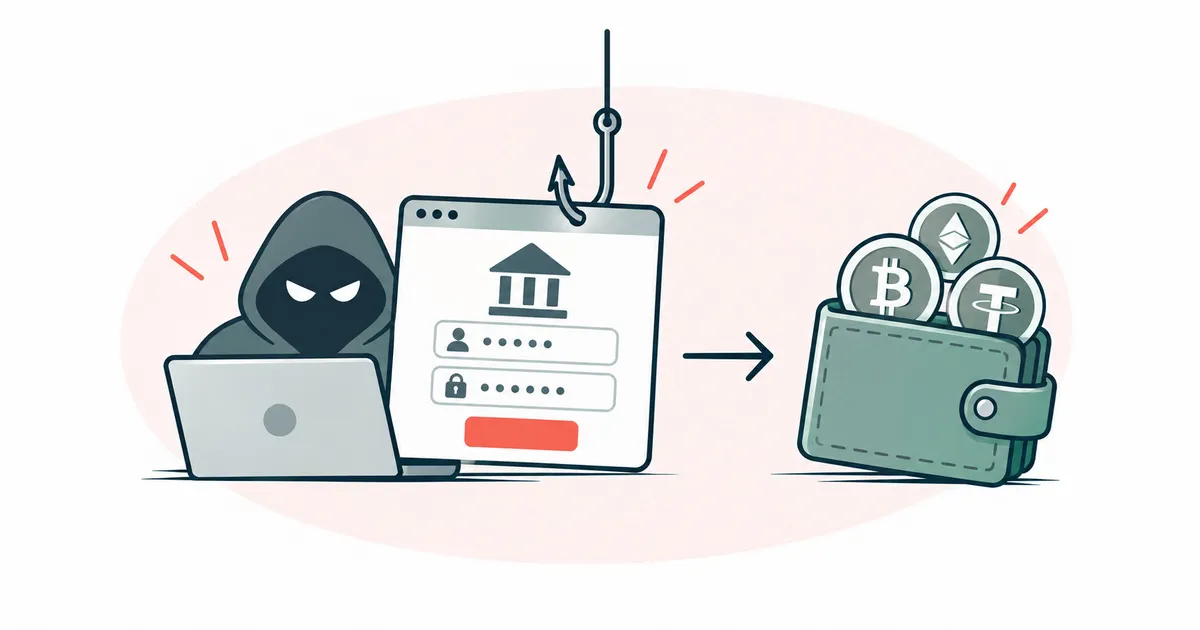 What are phishing and scams in crypto?
Most beginner losses aren't a hack but a con: how look-alike sites, fake support and “giveaways” work, and how to spot them.
Choosing a wallet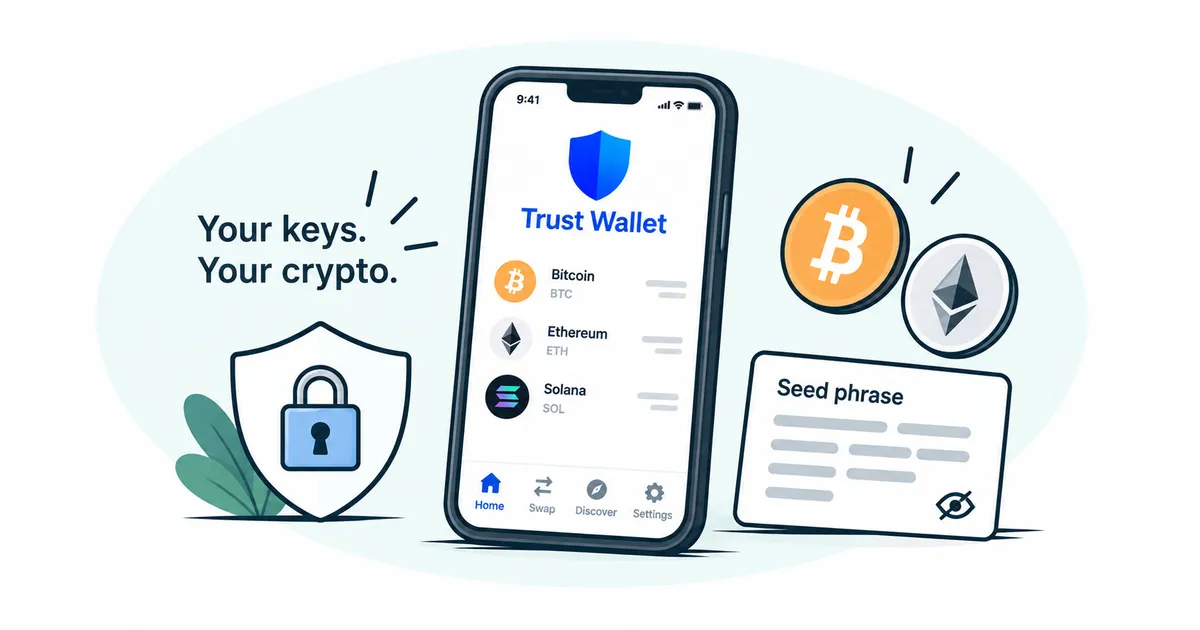 Trust Wallet — a review of the crypto wallet, its security and risks
A popular non-custodial hot wallet: many networks under one seed phrase. Free, but the earning hides in the spread and the markup.
Security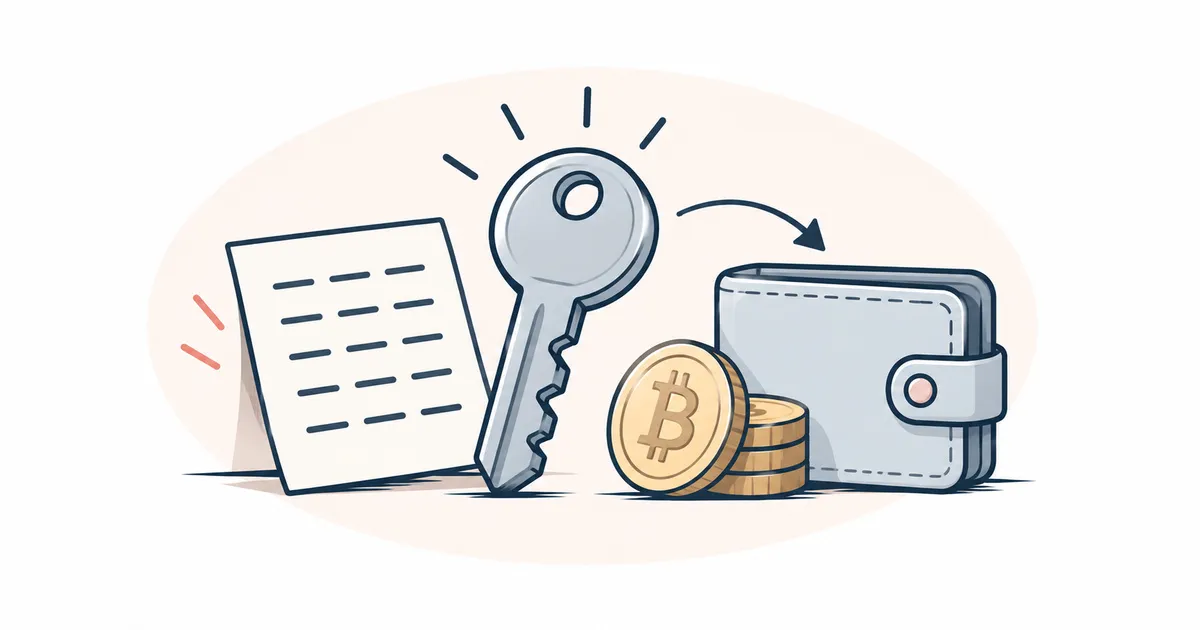 What is a private key in crypto?
Your private key is your access to your money. What it actually looks like, how it differs from a seed phrase, and why you never show it to anyone.
Security What is a seed phrase?
The 12 words that restore your whole wallet: what a seed phrase is, what it looks like, and why you never type it into a website.