Glossary
Glossary
A short dictionary of crypto terms: what a word means in a nutshell — and where to go for the full explanation. The definitions are our own, written for
✓ Verified Oct 23, 2026
A short dictionary of crypto terms: what a word means in a nutshell — and where to go for the full explanation. The definitions are our own, written for beginners; the full article is behind the link. On the page, terms are sorted A–Z automatically.
- Cryptocurrency (cryptocurrency) — a digital asset often used like money; kept not by a bank but by the whole network at once. → what is a cryptocurrency
- Blockchain (blockchain) — a shared "ledger" of transactions, copied to many at once; rewriting it unnoticed is very hard. → what is a blockchain
- Consensus (consensus mechanism) — the rules by which a network with no boss agrees which block is the true one. → what is consensus
- Proof of Work (proof of work) — agreement through miners' computational work; this is how Bitcoin is secured. → what is consensus
- Proof of Stake (proof of stake) — agreement through a coin deposit instead of computation; this is how Ethereum is secured. → what is consensus
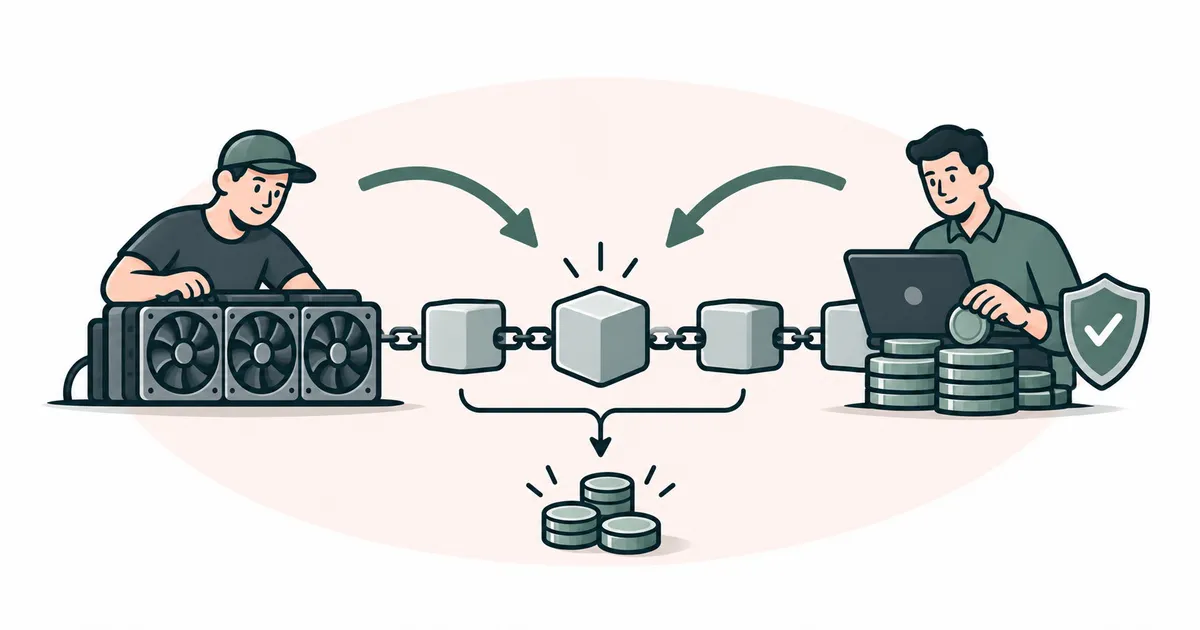
- Miners and validators (miners and validators) — those who add blocks and keep the network running — for a reward or a stake. → miners and validators
- Token (token) — a crypto asset with no network of its own: it lives on someone else's blockchain via a smart contract. → what is a token
- Token standard (ERC-20) (token standard) — a common format for a network's tokens, so wallets and exchanges handle them the same way. → what is a token
- Smart contract (smart contract) — a program on the blockchain that executes a written rule by itself, with no intermediary. → what is a smart contract
- Gas (gas) — the network's fee for an operation; the more complex the operation and the busier the network, the higher it is. → what is gas
- Issuance (issuance) — how and how many coins are created: with a cap (like Bitcoin's 21 million) or without. → what is issuance
- Halving (halving) — a scheduled halving of the block reward; for Bitcoin, roughly every four years. → what is issuance
- Premine (premine) — a share of coins created up front at launch rather than mined. → what is issuance
- Stablecoin (stablecoin) — a cryptocurrency that aims to hold a steady price (usually a dollar); "stable" does not mean "guaranteed". → what is a stablecoin
- Reserves (reserves) — what backs a fiat stablecoin (a dollar or its equivalent behind every token); "backed" doesn't always mean "easily redeemable". → what are reserves
- Depeg (depeg) — a stablecoin losing its peg: it promised a dollar, but the market pays less. → what is a depeg
- Seed phrase (seed phrase) — usually 12 or 24 words, a wallet's master key; whoever gains access to them controls the money. → what is a seed phrase
- Private key (private key) — the secret that signs every transfer; never show it to anyone. → what is a private key
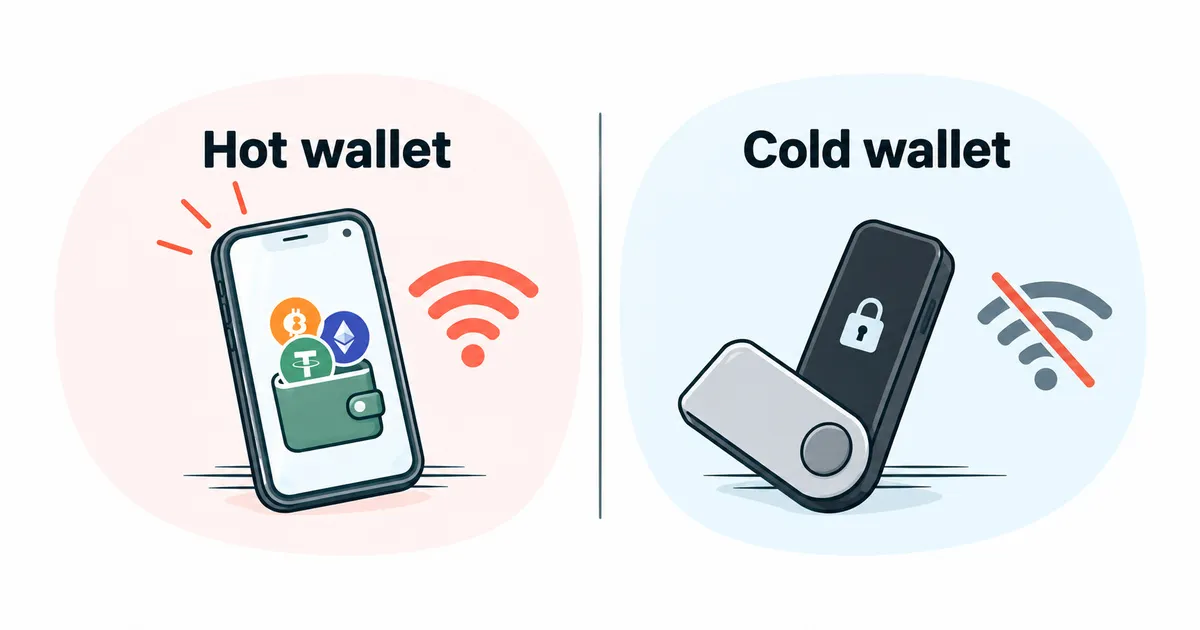
- Hot and cold wallet (hot / cold wallet) — the difference is key exposure and where signing happens, not just online/offline: convenient access versus a key kept offline (usually safer if handled carefully). → hot and cold wallet
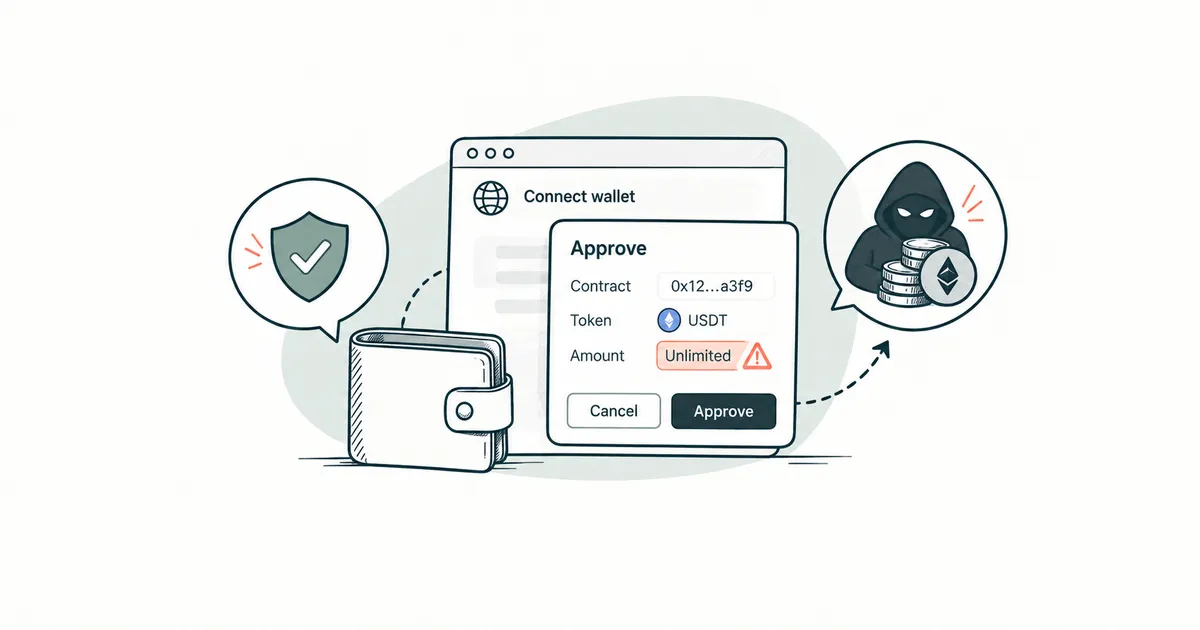
- Approve (token allowance) (approve / allowance) — a permission letting a contract spend your token (not a one-off signature), until you revoke it; a common risk on a DEX. → wallet connection safety
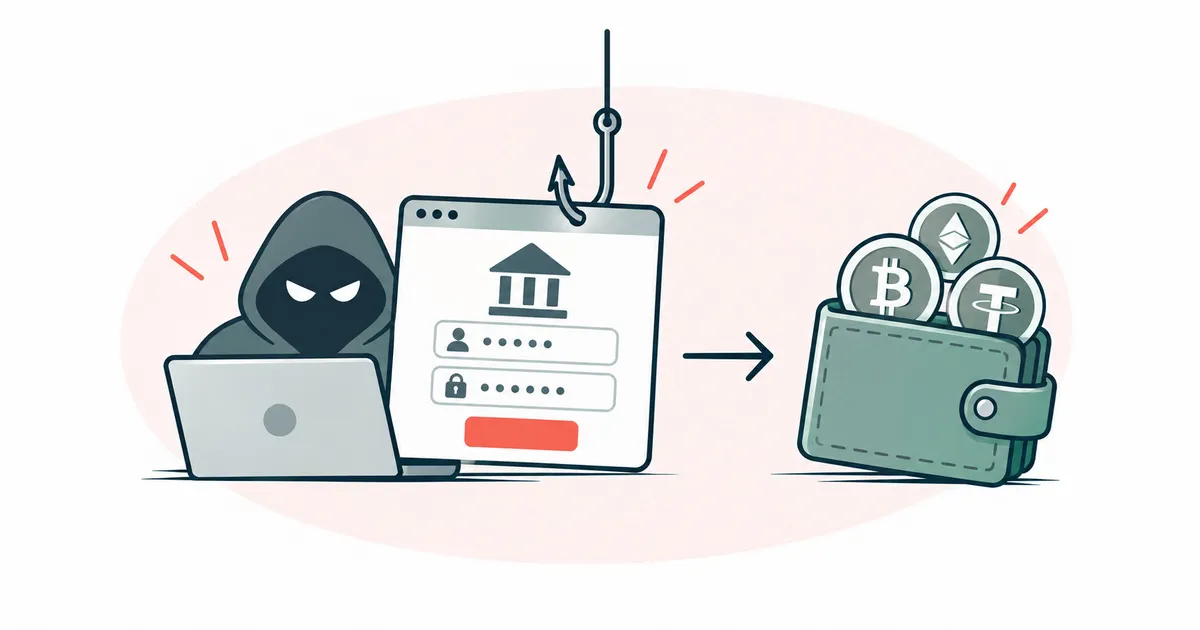
- Phishing (phishing) — luring out your access via fakery: a clone site, a fake "support", a bait email. → phishing and scams
- Scam (scam) — a fraud scheme after your money: "giveaways", "doubling", investment gurus. → phishing and scams
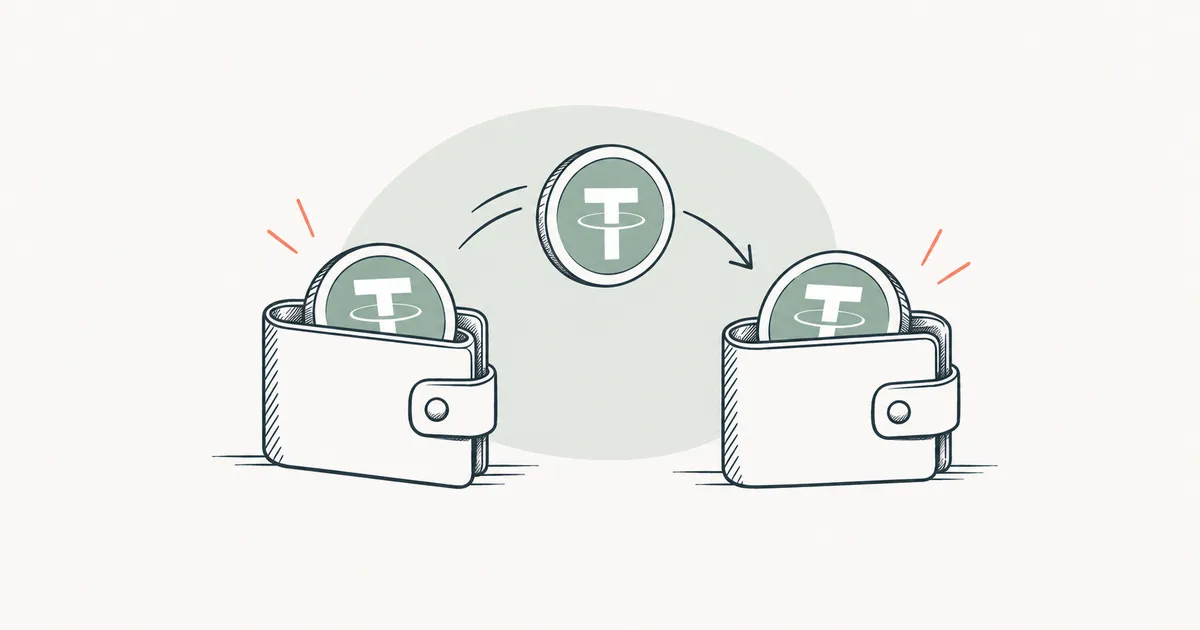
- Memo / destination tag (memo / destination tag) — an extra code on a transfer to an exchange; forget it when it's required and the payment hangs. → how to send USDT
- NFT (non-fungible token) — a non-interchangeable token: a record that a unique item belongs to an address. → what is an NFT
- Hard fork (hard fork) — an incompatible change to a network's rules; sometimes the chain splits and a new coin is born. → what is a hard fork
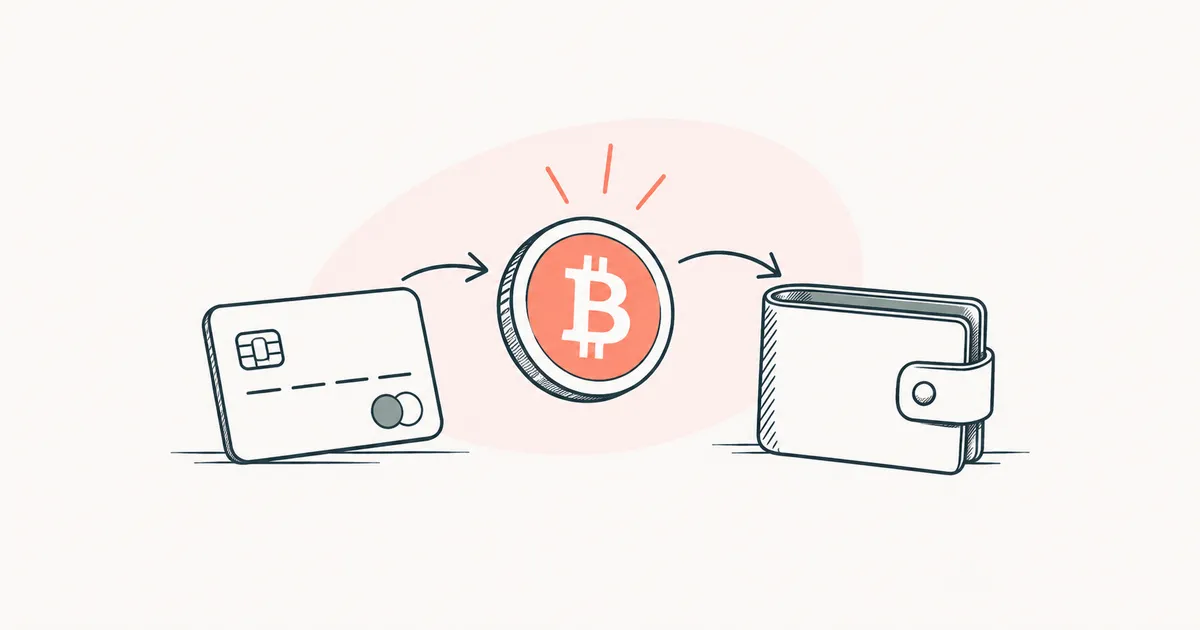
- KYC (know your customer) — identity verification at an exchange (ID, selfie); standard for ordinary exchanges. → how to buy crypto
- CEX / DEX (centralized / decentralized exchange) — a company-run exchange (holds funds, usually requires KYC — the extent depends on the service and country) versus swapping straight from your wallet. → how to choose an exchange