


How to choose a crypto exchange?
There is no single \”best exchange\”. The right one depends on your task and your country. Ready-made \”top exchange\” lists aren\’t worth trusting, because the principles and parameters behind their ranking are usually not disclosed, so it\’s essentially the author\’s subjective opinion, and often the lists are paid for as well. That is why we lay exchanges out by verifiable features and show what to look at, leaving the choice to you.
There are two fundamentally different kinds of exchange, and the main difference is who controls your money.
- An ordinary, centralized exchange, or CEX. The company matches trades itself and holds your funds (this is called being custodial), and to sign up you need KYC — identity verification with documents. It\’s more convenient for a beginner: card payments, support, everything in one place. A clear example is Binance.
- A decentralized exchange, or DEX. Swaps happen straight from your own wallet, with no company and no registration. In return, the responsibility is on you: for example, you can grant a smart contract too broad an access to your coins (this is called an approve) and lose funds because of it. A clear example of a decentralized exchange is Uniswap.
This isn\’t a question of \”which is better,\” but two different approaches to control and risk (see what is a private key, smart contract).
- You need simplicity and card purchases. That\’s a centralized exchange, for example Binance.
- You want to swap without an intermediary or registration, and you already have a wallet. That\’s a DEX, for example Uniswap.
- Low fees matter to you. Look not at a single number but at the breakdown by layer: deposit, trade, withdrawal. It\’s in the reviews.
- Security matters to you. Look at verifiable facts (licenses, incident history, proof of reserves), not at a \”trust rating.\”
- Control of funds: whether they\’re with the company or with you.
- KYC and availability: whether identity verification is required and whether the exchange works in your country.
- Fees by layer: separately for deposit (card), trading and withdrawal.
- Security facts: licenses, incident history, proof of reserves.
Below are objective slices by verifiable features — for example, \”available with a card\” or the number of tradable assets. They are assembled from the services\’ data automatically: the order is justified by fact, not opinion.
An international brand and platform for operations with digital assets; services are provided by several legal entities. This page is about the group and its legal history.
DEX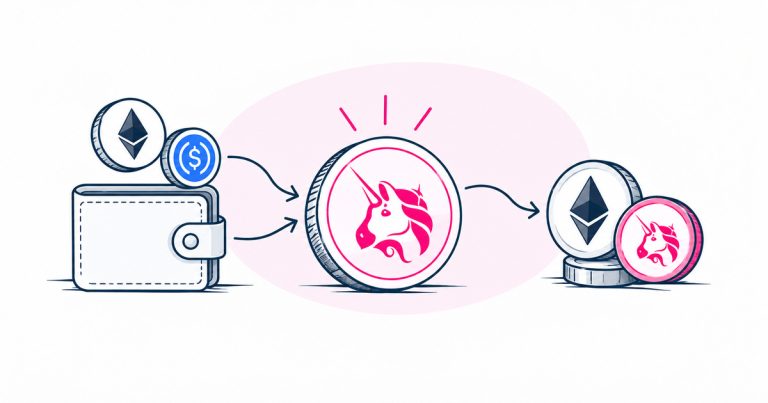 Uniswap
The largest decentralized exchange: swaps straight from your own wallet via a smart contract. No one holds your funds — which changes both upsides and risks.
Buying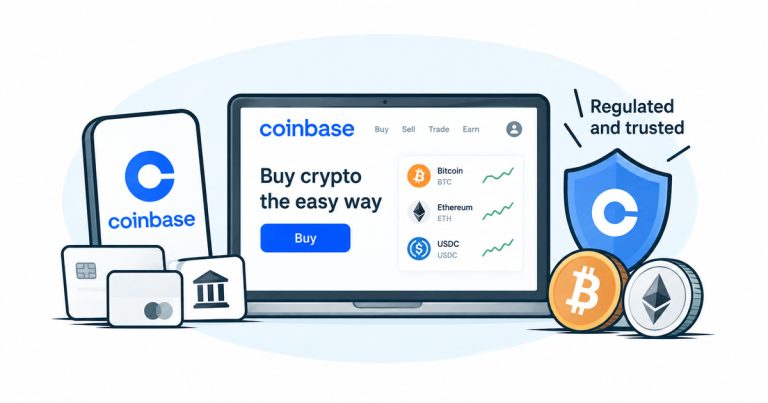 Coinbase
A large US exchange and public company (NASDAQ: COIN): simple entry for beginners, custodial, KYC. No scores — fee layers and verifiable facts.
Buying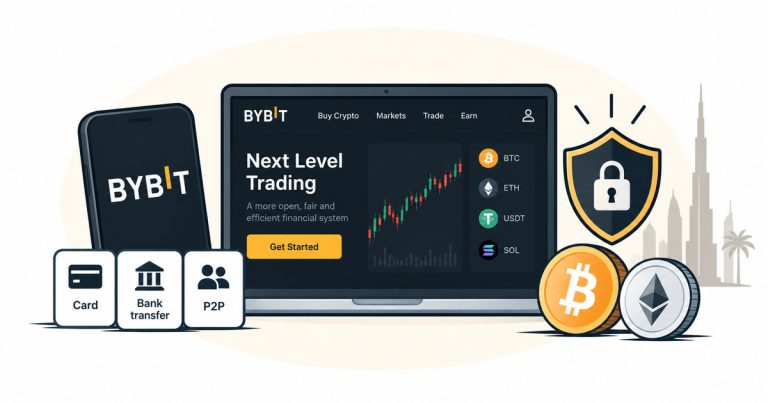 Bybit
Bybit
A large centralized exchange: custodial, KYC, many assets and deposit methods. No scores — how it works, fee layers, and verifiable security facts.
Buying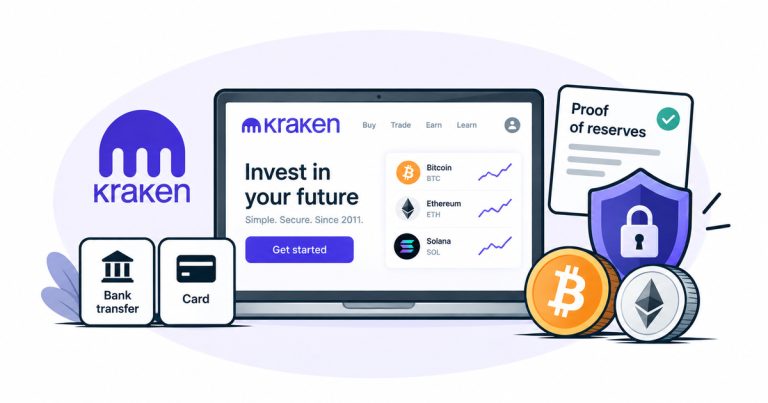 Kraken
One of the oldest US exchanges: custodial, KYC, publishes proof-of-reserves. No scores — fee layers and verifiable facts.
Comparison Crypto exchanges by number of assetsHow many assets exchanges support — a fact slice, not a “top” list: why more coins doesn't mean “better” and why CEX and DEX are counted separately.
Buying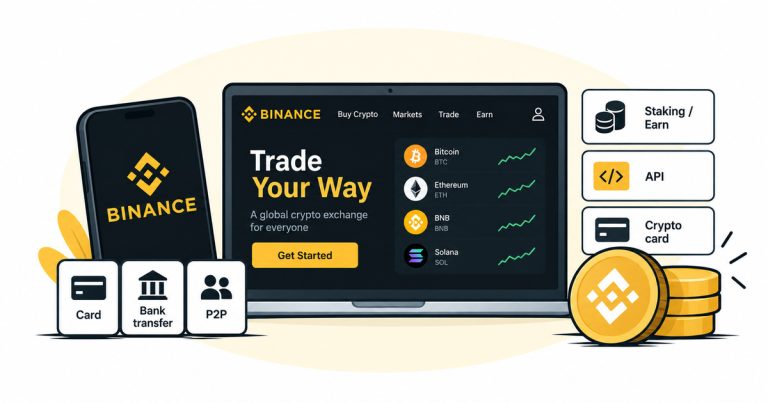 Binance
One of the largest crypto exchanges by turnover: custodial, KYC, many assets and fiat rails. No best exchange in general — a breakdown of what to look at yourself.