


How to store crypto: hot and cold wallets
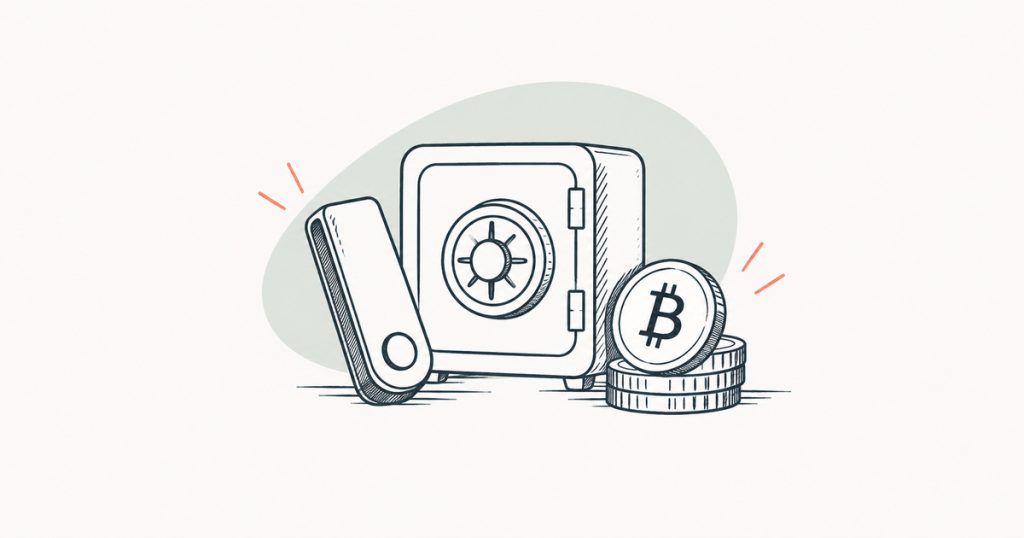
In short: how to store crypto
Storing cryptocurrency means controlling the key to it, and here there are two paths. You can leave the coins on an exchange, which is simple, but then the control is not yours, or you can move them to your own wallet. Then the control is yours, but so is the responsibility. For small everyday amounts a hot wallet will do. For savings a cold one.
The seed phrase is the backup of access to your coins, and only you should know it. Whoever learns the phrase controls the money, so this rule matters more than all the others.
What you need to store crypto
Two things will come in handy. First, an understanding of what a key and a seed phrase are. If you have not looked into it yet, start with the articles what is a seed phrase and what is a private key, this is the foundation, without which moving on is dangerous. Second, a little time without rushing, since haste is the fraudster's best friend (see phishing and scams).
How to store crypto — step by step
Step 1. Decide: exchange or your own wallet
When you buy crypto on an exchange, the exchange, not you, disposes of the key to it, by the principle "not your keys, not your coins", which the article what is a private key covers. It is convenient, and it cushions you against your own mistakes, but you depend on the exchange, so here is a fork. If the amounts are small and you trade or spend often, you can leave them on the exchange for a while, understanding that the control is not yours. If, however, you want real control or to hold for a long time, set up your own wallet and go to step 2.
Someone else's control is someone else's risk, for example a freeze of funds or trouble at the exchange itself. That is why large amounts are not left on an exchange for long.
Step 2. Choose the wallet type for the task
Your own wallet comes in hot, that is, an app online, and cold, that is, an offline device. The difference and the trade-offs are covered in detail in the article hot and cold wallet, and in short it goes like this. If these are small everyday amounts, take a hot wallet, it is fast and convenient. If these are savings or large amounts, take a cold wallet, it reduces the risk of remote key theft, though using it is a bit less convenient. At the same time it does not by itself protect against a wrong address or network or a lost backup.
We do not recommend a specific product. But only explain the principle of choosing, though for recognition we will name some examples. Among cold, that is, hardware, wallets the familiar names are Ledger and Trezor, and among hot ones MetaMask and Trust Wallet. These are examples for orientation, not a recommendation, and what to look at when choosing is covered on the wallets page. While for individual services there are the reviews Ledger and Trust Wallet.
Step 3. Create the wallet and write down the seed phrase
On creation the wallet will show the seed phrase. This is the most important moment of the whole process. For most wallets the backup is exactly a seed phrase, and for some, for example on MPC or multisig, recovery is handled differently. Then you follow the wallet's own instructions, which the article what is a seed phrase covers. Write the phrase down offline, not on your phone or computer. The simplest medium is paper, and a metal plate, where the words are stamped or assembled from letters, is more reliable, since metal survives what would destroy paper. Check the word order and keep the record like your most important document, safer in two different places.
Do not photograph the seed phrase, do not save it in the cloud, in notes, or in a chat. Do not show it to anyone. Lose it and there will be nowhere to get the money back, show it and consider it given away. More on why is covered in the article what is a seed phrase.
Paper burns, gets wet, fades. Gets lost, and any record, whether paper or metal, can be found or stolen. So metal is more reliable than paper against fire and water, keep the copy in more than one place, away from prying eyes, and tell no one where it lies. A seed phrase can also have an extra secret word (called a passphrase) for added protection. But for a beginner the first priority is not to lose the phrase itself.
Step 4. Send a small test amount first
Before moving everything, send a small amount to the new wallet and make sure it arrived and is visible. How to choose the network correctly and check the address is a separate topic, which the article how to send crypto covers. If the test amount arrived, move the rest. If it did not arrive, send nothing more and first sort out the address and the network.
The main storage risk is not a hack. But your own mistake, that is, losing the seed phrase or falling for fraud. Real support and a real wallet never ask for a seed phrase, and any such request means fraud. A backup of the seed phrase should be kept in more than one place and never online (see phishing and scams).
What's next
It depends on which finish you reached. If these are small amounts for everyday use, then a hot wallet is set up, the seed phrase is written down offline. The test transfer went through, and next it is useful to master how to send crypto. If these are savings for the long term, then a cold wallet is ready and the seed phrase is in reliable offline storage. But double-check that a backup of the phrase exists and is kept separately. In both directions it is worth knowing the main traps by sight in advance, which phishing and scams covers.