


USDC (Circle) — a dollar stablecoin
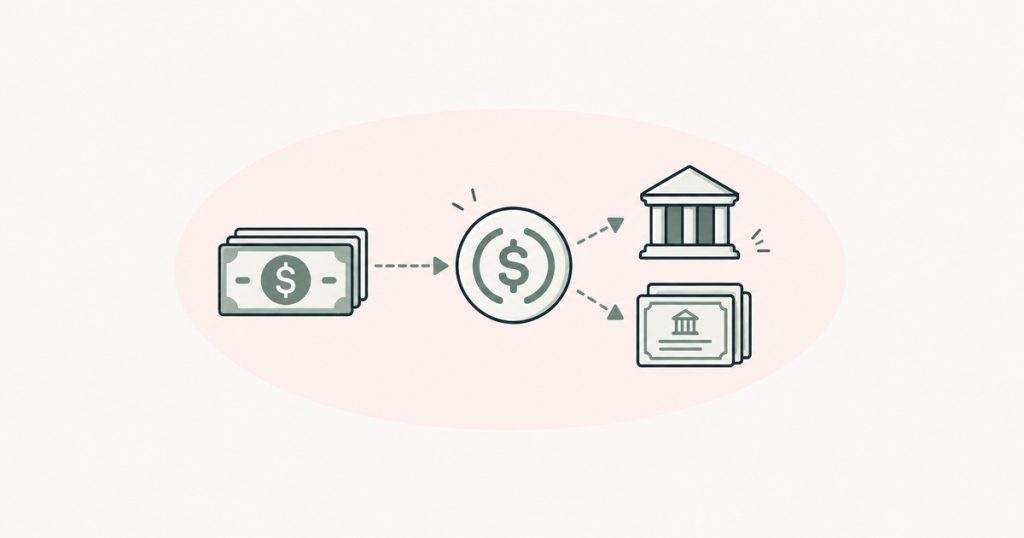
How it works
USDC is the second-largest stablecoin; it is issued by the company Circle. A stablecoin is a cryptocurrency that holds one price; for USDC that is exactly one dollar (how this works in general — in what is a stablecoin). Like USDT, it holds the dollar one to one, but it is known for its emphasis on transparency and on working “by the rules”. It launched in 2018.
1 USDC equals the dollar one to one, and behind it stand easily available assets — cash and short-term US government bonds1.
USDC is issued by the Circle group: in the US by Circle Internet Financial, and in the EU under the MiCA rules by a separate company, Circle Internet Financial Europe SAS (which also issues the euro stablecoin EURC). You can exchange USDC back into ordinary money one to one with Circle itself, but under its terms and holder requirements (for example, through a Circle account), and not everyone has the same access; usually, though, the token is simply sold on an exchange.
USDC has no hard cap. Circle issues new tokens when it receives dollars and burns them on one-to-one redemption, so the number of USDC in circulation moves with demand, and by size it is the second-largest stablecoin after USDT. How much is issued right now can be checked in where to check: Circle’s transparency page. How coin issuance works in general is covered in the article issuance.
Every month Circle publishes a reserve check by a major audit firm: it confirms that the reserves are no less than the tokens issued1. Such a check as of a date is called an attestation — a snapshot at a moment, not continuous oversight — and how it differs from a full audit is explained in what are reserves.
USDC exists on several networks at once (Ethereum, Solana, and others). When transferring, choose the same network on both sides, otherwise the money may not show up (see how to send crypto).
USDC briefly lost its peg: about 3.3 billion dollars of its reserves were stuck in the collapsed US bank Silicon Valley Bank. As soon as access to the money was confirmed, the price returned to the dollar within a few days2. This is a classic example of a temporary depeg with real backing — the breakdown in depeg.
Where to check current USDC data
- Reserve composition and amount, the check reports, redemption terms, and the list of networks — where to check: Circle’s transparency page.
- Price and market cap.
Properties
- Transfers and settlements, including where reserve transparency is valued
- Storing value in a dollar equivalent
Reliability rests on the quality of the reserves and on whether they are confirmed honestly (see what are reserves). Exactly which Circle entity is responsible for issuance depends on the country, and redeeming one to one is available under the company’s terms and not to everyone in the same way.
A company stands behind USDC, so it can technically freeze funds at a particular address. And a break from the peg is possible even here, as the 2023 case showed (depeg).