The Ethereum network — how it works and how reliable it is
The Ethereum network in plain words
What Ethereum is and why ETH is needed is explained in the Ethereum profile.
Think of sending a parcel. The tracking number appears at once, the "delivered" mark comes later, and only after that mark can the parcel no longer be turned back. On Ethereum, a transfer gets into a block, the next batch of recorded transfers, within seconds, and it is finally confirmed in about 15 minutes1. A wallet, the app for your crypto, usually shows the transfer as soon as it is in a block, while an exchange credits it according to its own rules.
What happens to my transfer during an Ethereum network outage?
A transfer that has already received final confirmation stays valid. When confirmation is delayed, blocks usually keep coming and the transfer goes through; it just gets its "delivered" mark later, as happened in May 2023. If the outage hits a service your wallet or exchange relies on, withdrawals may be paused, as in November 2020. If a layer-2 network stops, transfers and withdrawals on it wait until its operator restarts it.
Do not send the same transfer several times in a row. First check whether the first one went through. You can see that in a block explorer, a website that shows whether a transfer has arrived.
Do not enter your seed phrase (the set of words used to restore a wallet) on websites that promise to "rescue" a stuck transfer. How to send transfers without mistakes is covered in the guide how to send crypto.
Layer-2 networks on top of Ethereum
Layer-2 networks, or L2s, process transfers more cheaply on their side and write the results to Ethereum. Such networks are called rollups2. Picture a shop till that rings up hundreds of receipts a day and then takes a single total to the bank. There is one trip to the bank for everyone, so each customer's share of it costs less. Examples are Arbitrum One, Base, OP Mainnet and ZKSync Era3.
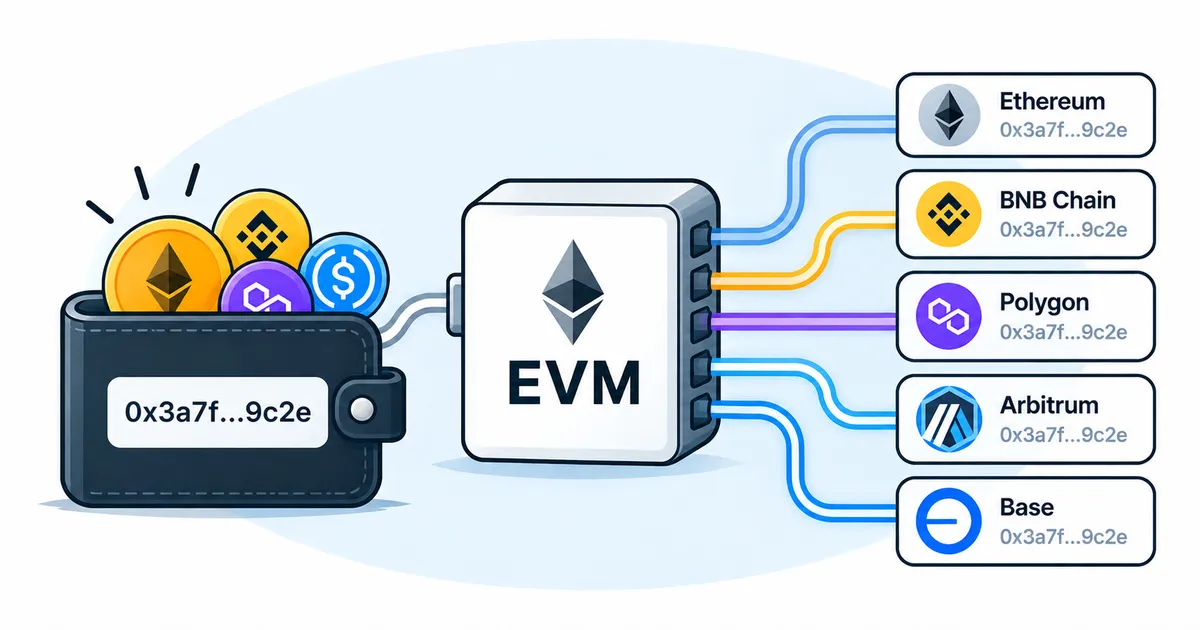
Your address on a layer-2 network is usually the same as on Ethereum, yet each network keeps its own balance. A transfer sent on Base will not appear on Arbitrum One or on Ethereum itself, even when the address matches.
Layer-2 networks have risks of their own. On some of them a single operator program, called a sequencer, sets the order of transfers, and if it goes offline, the network stops recording transfers for a while4. That is what happened on 5 August 2025, when the Base network produced no blocks for 33 minutes and deposits and withdrawals did not work during that time5. From some of these networks (called optimistic rollups), money takes about a week to go back to Ethereum directly, because during that whole time anyone can challenge the recorded data. A faster withdrawal is possible through an intermediary who charges a fee for it4. How much a layer-2 network depends on its operators is shown by L2BEAT.
How Ethereum validators agree on new blocks
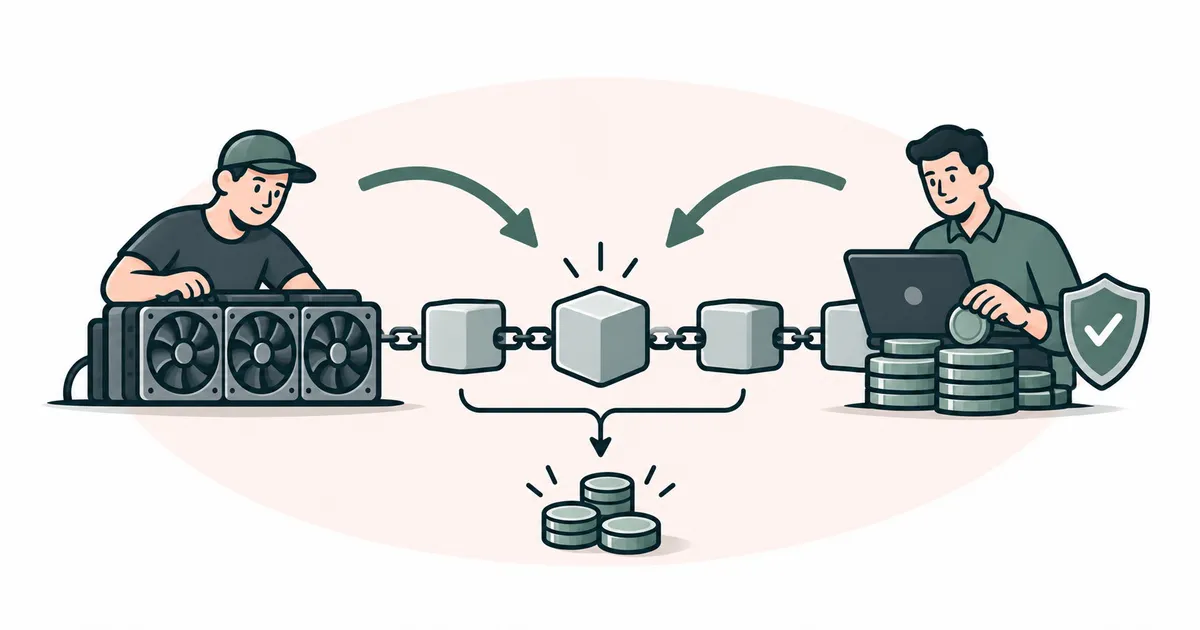
Blocks on Ethereum are assembled and checked by validators who keep ETH as a deposit. Miners used to do this, and the move to staking, called The Merge, cut the network's energy use by about 99.95%6. Both roles are described in miners and validators and what is consensus.
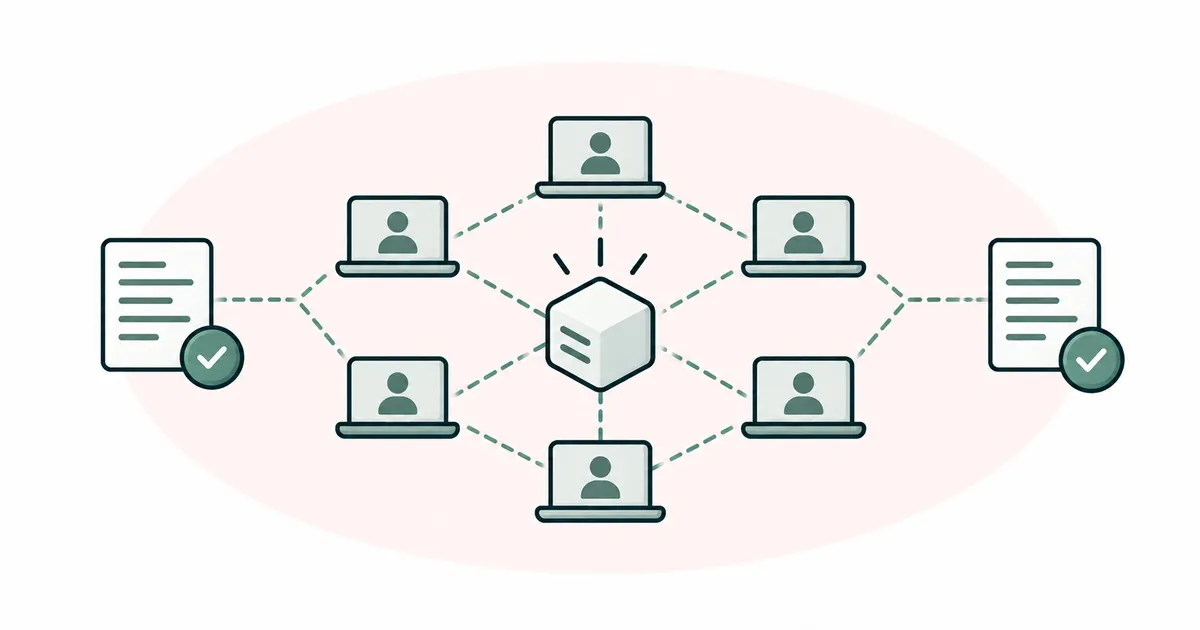
It resembles a meeting of the residents of an apartment building. One person makes a proposal, and it counts as adopted once the owners of two thirds of the apartments vote in favor. On Ethereum, likewise, one validator proposes a block and the rest check it and vote. The block becomes final when validators holding at least two thirds of the total deposit have voted for it. A final block can be reversed only if the attackers are ready to lose at least a third of the total deposit7.
Since the switch to staking, every node, that is, a network computer with a copy of all the records, has run two programs. One executes transfers and smart contracts, the other handles agreement on blocks8. Several independent teams write each of them.
Programs and tokens on the Ethereum network
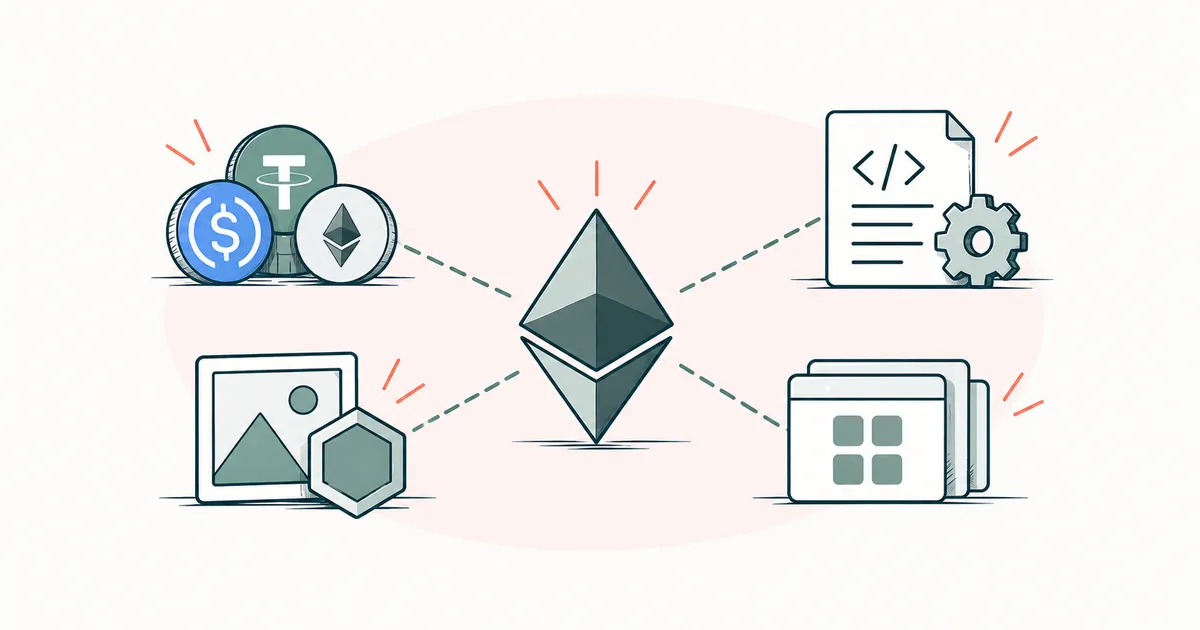
Smart contracts, the programs inside the network that carry out set rules on their own, are run on Ethereum by a shared engine called the EVM, identically on every node. The same engine runs on other networks too, as the article what is EVM explains, and how the programs themselves work is covered in smart contract. Tokens and NFTs are issued in common formats, described in token standards. The network charges a fee in ETH for every action, so you usually need some in your wallet. What the fee depends on, and how to lower it or pay it in the crypto you are sending, is explained in what is gas.
How the Ethereum network is upgraded
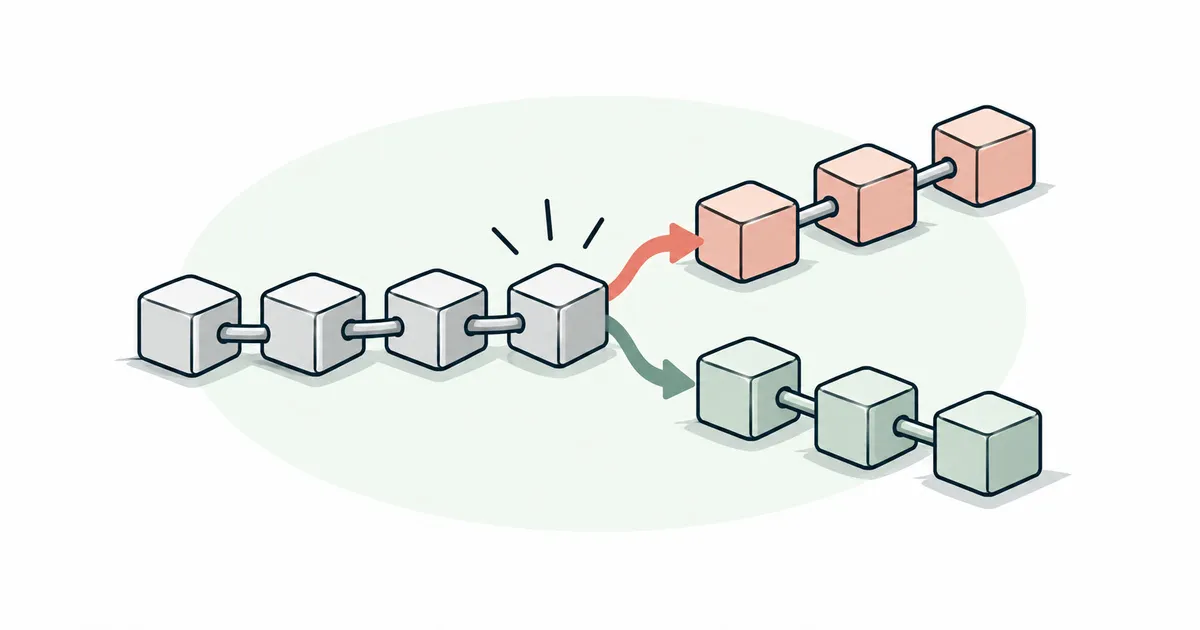
Ethereum's rules change through planned network upgrades. They are usually agreed on in advance so that all node programs switch to the new rules at the same time8. An ETH holder has nothing to do during an upgrade6. Who proposes changes, and why a network can split when people disagree, is covered in hard fork.
In its first 10 years the network went through 16 upgrades9. The next one is called Glamsterdam, and as of 30 October 2026 no date has been set for it8. For the schedule, see.
Ethereum network reliability and outage history
In 10 years of operation Ethereum has never stopped completely9. There have been outages, though, all of them tied to node software, and each time the network kept running on nodes with other programs.
A network and the apps on it break in different ways. Ethereum kept working when programs and services that use it were hacked, such as The DAO program in 2016 or the Bybit exchange, from which crypto worth about 1.5 billion dollars was stolen on 21 February 202510. For the safety of your coins, the network's reliability is only one part. The other part is whom you trust with your coins and what you sign in apps (wallet connection safety).
Who can stop the Ethereum network?
No single person or organization can switch Ethereum off alone11. Final confirmation of blocks stalls when validators holding more than a third of the deposit are offline or running with an error. If that drags on, the network's rules start gradually taking deposit away from the disconnected validators until the working ones again hold two thirds7. In this way confirmation comes back without any company having to decide anything.
Where to check current data on the Ethereum network
The number of validators, the total deposit, the current fee and the time to final confirmation are shown in a block explorer.
The shares of node software are on ethereum.org
, the risks of layer-2 networks on L2BEAT
, and the progress of upgrades on the network's history page.
Frequently asked questions
Did transfers on Ethereum become cheaper and faster after the move to staking?
Can I run my own Ethereum node at home?
Is the Solana network faster than Ethereum?
How many validators does the Ethereum network have?
More detail on Ethereum's design, upgrades and outages
Time on the network is divided into slots of 12 seconds, and 32 slots make an epoch. In each slot a single validator is chosen to propose a block7. The deposit cuts begin when there has been no final confirmation for more than four epochs7.
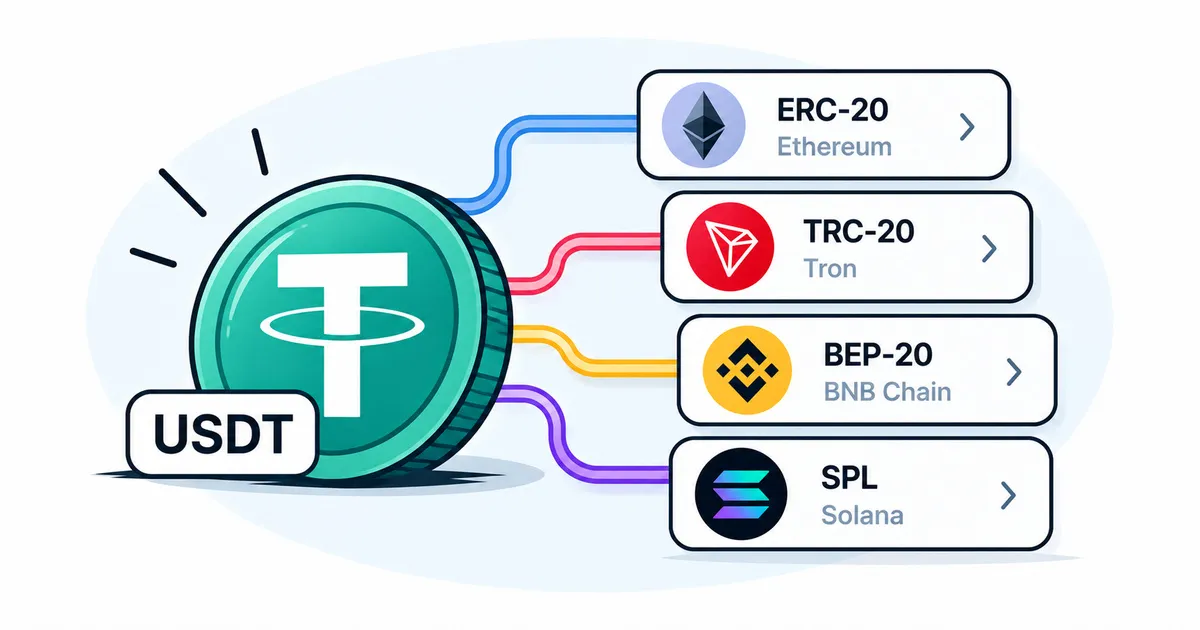
The main languages for Ethereum smart contracts are Solidity and Vyper12. Tokens are issued in the ERC-20 format13, and NFTs in the ERC-721 format14.
Formally, every upgrade counts as a fork, that is, a change of rules, and ethereum.org keeps the full list with dates and block numbers8. The most recent upgrade by 30.10.2026, Fusaka, took place on 3 December 2025.
Dencun, in March 2024, added a separate cheap space in blocks for layer-2 data8. Fusaka, in December 2025, made room for more of that data, because each node now stores only part of it and checks the rest by sampling15.
Outages caused by node software:
- September and October 2016. Attackers repeatedly forced the Geth node program to run a slow operation. Nodes on other programs did not have this weakness, and the network kept working while Geth was being fixed16. Upgrades on 18 October and 22 November 2016 closed off this route for attacks8.
- 11 November 2020. A bug in old versions of Geth sent some nodes onto a separate chain. Among them were the nodes of Infura, the service the MetaMask wallet uses by default. MetaMask ran into problems, and exchanges such as Binance paused withdrawals of ETH and tokens for about two hours17.
- 27 August 2021. Someone exploited a bug in Geth at block 13,107,518, and nodes running versions that had not been updated went onto a separate chain. A fixed version of the program had already been released by then18.
- 11 and 12 May 2023. Overload in some node programs made the network lose final confirmation twice, for about 25 minutes and for about an hour. Blocks kept appearing, transfers were barely affected, and the network recovered without manual intervention19.
- 4 December 2025, right after the Fusaka upgrade. A bug in the Prysm program cut validator participation in voting to about 75%, and 248 of 1,344 possible blocks did not appear19. Participation stayed above two thirds, so final confirmation did not stop, although the margin was small20.
A bug in software run by a minority of nodes barely touches the network. If the program is used by over a third of nodes, the bug can stop final confirmation, and with two thirds of nodes it can lead to a wrong chain being confirmed as final16. The shares of the programs change all the time.