


WBTC (Wrapped Bitcoin) — bitcoin as a token
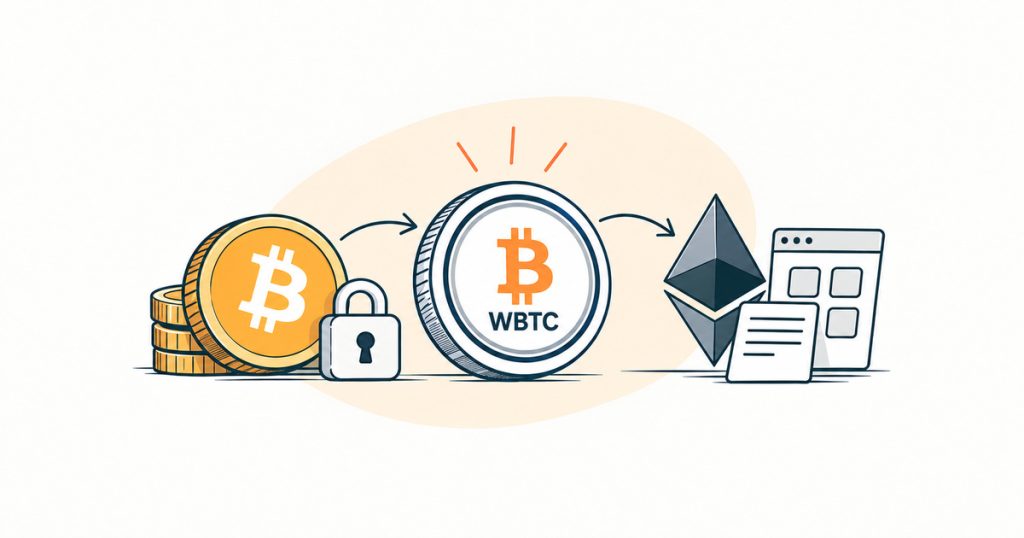
How it works
WBTC is “wrapped bitcoin”: a token behind each unit of which lies one real BTC held by a special keeper. Why is this needed? Bitcoin exists in its own network and cannot, by itself, take part in smart-contract apps. WBTC gives bitcoin a kind of “passport” into other networks where such apps run, Ethereum first of all, but it also exists on a number of other networks. You hand over BTC for safekeeping, receive WBTC in return, and use it where bitcoin itself cannot go. This is a clear example that a token is not a coin of its own, but an asset on top of someone else’s network (see what is a token).
WBTC is a token, that is, a crypto-asset with no separate network of its own, and it works as a token on Ethereum and on a number of other networks (for example, Tron, Base, Avalanche, BNB Chain), not on the Bitcoin network. The very technique of “wrapping” one network’s asset into a token of another is described in the project’s technical document (whitepaper)2.
Behind each WBTC lies one real BTC, held by keepers, who are called custodians. A new WBTC is minted when someone hands over BTC for safekeeping, and is “unwrapped” back into BTC on redemption, so there are exactly as many WBTC in circulation as there are bitcoins held in custody. The model has changed over time; the BTC is now distributed among several keepers across different countries, and minting and redemption go through specially authorized participants. The current set of custodians and the scheme can be checked in where to check: wbtc.network. How coin issuance works in general is covered in the article issuance.
WBTC is not bitcoin itself, but a token-promise backed by bitcoin held in custody. So on top of the usual risks comes trust in the keepers and in the contract program that mints and burns the tokens. You can hold WBTC exactly as much as you trust those who hold the BTC and whether it is confirmed honestly.
WBTC links the Bitcoin network with the networks where smart contracts live, Ethereum first of all. For a transfer you pay the fee of the network in which you hold WBTC (on Ethereum it is called “gas”, see what is gas), not the Bitcoin network fee.
WBTC’s value depends on whether the promised bitcoin really is held in custody. So it matters who holds the BTC and in which country, and how that is confirmed, and the scheme changes over time, so check the current one (see what are reserves).
Where to check current WBTC data
The current set of custodians, the state of the backing, and the list of networks can be checked in where to check: wbtc.network or a network explorer. Price and market cap can be checked in.
Properties
- Using bitcoin's value inside Ethereum apps
WBTC’s price follows bitcoin, but it has a different set of dependencies, namely the network it is issued on and the BTC custodians. So on top of bitcoin’s own market risk comes the question of trust in those who hold the backing (see what are reserves).