XRP Ledger (network) — a fast network for settlements and tokens
The XRP Ledger network in plain words
What the XRP coin itself is, where all the XRP came from and how the coin differs from the company Ripple are covered in the XRP profile.
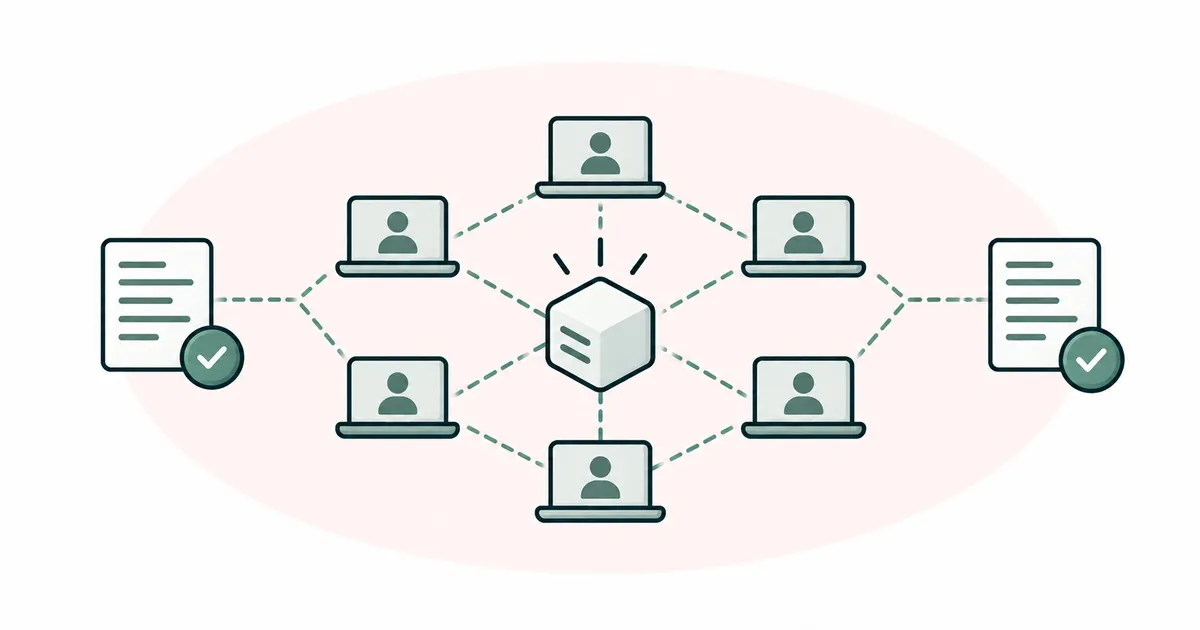
Think about how you decide whether to believe a piece of news. Everyone picks the sources they trust and treats an event as confirmed when almost all of those sources report it the same way. If the sources contradict each other, a careful person waits until the picture clears up and does not note down two versions at once. XRP Ledger servers behave the same way, except that they compare notes every few seconds.
The reserve and the destination tag on the XRP Ledger
Every account on the XRP Ledger holds a reserve, an amount of XRP that cannot be spent. It is like the minimum balance on a bank account that grows with every service you add. The reserve is made of a base amount plus an extra charge for each entry you add to the account, such as a connected token, an exchange order or an NFT1. The first two connected tokens can be free if the account has almost no other entries2. A new address, the number of your "account" on the network, starts working only once it receives XRP equal to the base reserve or more3. The size of the reserve is changed by a validator vote1, so look up the current amounts at.
How much of the reserve you can get back is explained in the XRP profile.
A destination tag is a number in a transfer that tells the recipient, usually an exchange, which customer to credit. If the exchange shows a tag next to the address, copy it every time and exactly; if it does not show one, leave the field empty. The network itself does not check the tag by default. A transfer without a tag to an exchange's shared address goes through, yet the exchange then does not know whom to credit, and only its support team can help. Some recipients set up their address so that the network rejects any transfer without a tag, and it has to be sent again with the tag4. The XRP profile explains what to do if you forgot the tag.
How XRP Ledger validators agree on new records
Transfers on the XRP Ledger are gathered and checked by validator servers. Each server on the network has its own trust list, a list of validators that the server's owner believes will not collude with each other5. Over several rounds of comparison the trusted validators arrive at one version of the records, and a validated version counts as final6. Each new version usually closes 3 to 5 seconds after the previous one7. How agreement works in a blockchain is covered in what is consensus and miners and validators.
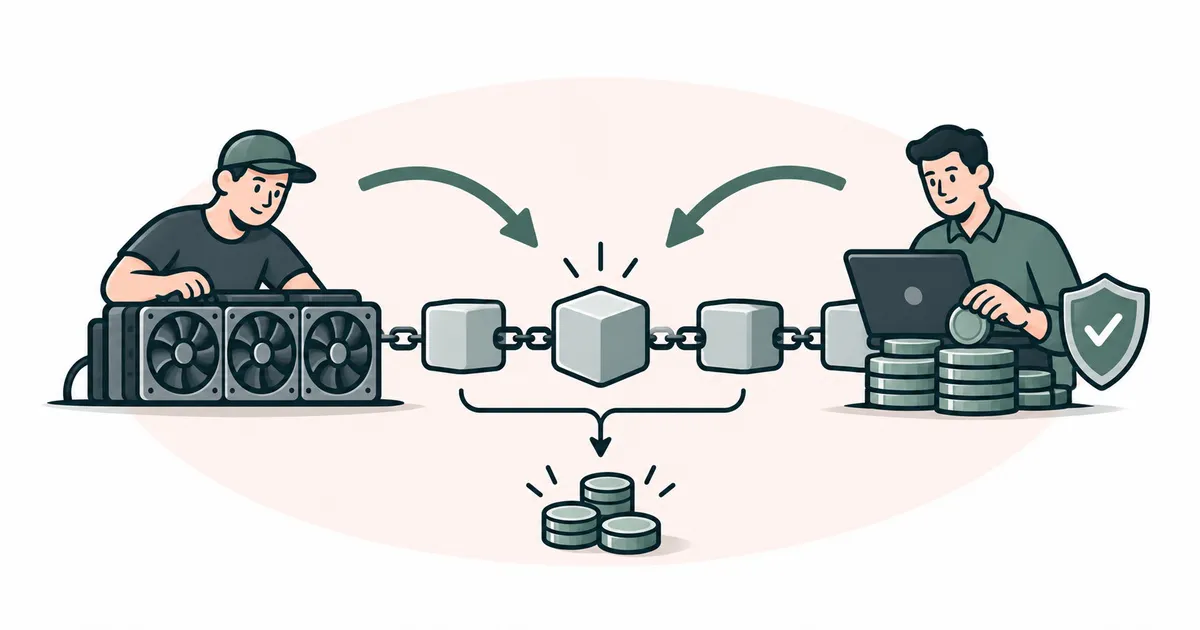
The XRP Ledger pays no reward for running a validator, and anyone can run one without paying and without holding XRP8. The transfer fee goes to nobody: that amount of XRP is burned. The fee exists so that the network cannot be flooded with junk transfers, and it rises when the network is busy9. For the current fee, see.
The agreement rule is designed for the worst case. If too many trusted validators are faulty, the network stops creating new versions of the records. It would rather halt than record something wrong or split into two versions of history6.
What happens if XRP Ledger validators fail to agree?
If the trusted validators of the XRP Ledger cannot agree, the network stops confirming new transfers until agreement is restored. Confirmed transfers and balances stay as they were, and whatever crypto you hold does not go anywhere. Every transfer has a deadline. If it has not made it into a confirmed record by then, it will no longer go through, and you can send it again10.
Do not resend a transfer blindly, or you may pay twice. First find the original one by its hash, the transfer's number on the network, in a block explorer, a website that shows whether a transfer arrived.
How to send transfers without mistakes is explained in how to send crypto.
How the rules of the XRP Ledger network change
New features and fixes are added to the XRP Ledger as amendments. An amendment switches on only if it has long and steady backing from a large majority of trusted validators11. Server owners are the ones who need to update their software. If you use a wallet (an app for crypto) or an exchange, its team usually keeps track of updates.
The vote leaves time to find a bug before an amendment goes live. In February 2026 a signature-checking bug was found in the Batch amendment that would have let an attacker make transfers from other people's accounts without their key. The amendment was not yet live on the main network, so no funds were harmed12.
Can Ripple control the XRP Ledger network through validators?
Ripple alone can neither change XRP Ledger rules nor cancel a confirmed transfer. Its validator is one of the trusted ones and votes on amendments on equal terms with the rest, and the company has no more rights on the network than other participants8.
The company does have influence through trust lists. By default a server takes them from two publishers, the XRP Ledger Foundation and the company Ripple, and those lists are usually almost identical. List publishers decide which validators most of the network trusts, and that is considerable power5. Almost all servers keep similar lists, and the XRP Ledger is criticized for this: trust in it is concentrated in a small circle of validators. Who is on the recommended list now and which of its validators Ripple runs, see.
The Ripple profile covers the company's legal history.
What is built into the XRP Ledger network
Can you issue tokens and NFTs directly on the XRP Ledger?
Yes. The XRP Ledger network has token and NFT issuance built in, and no separate smart contract (a program inside the network) is needed. To hold a regular token, you first allow it on your account. This permission is called a trust line, and without it someone else's token will not reach you on its own. XRP itself needs no trust lines2. For what a token is in general, read what is a token. NFTs were built into the network on 31 October 202213, and there is more about them in what is an NFT.
General-purpose programs of the kind written for Ethereum or Solana do not exist on the XRP Ledger main network on 30.10.202614. A separate network, XRPL EVM, compatible with Ethereum, was built for them15. What compatibility with Ethereum means is explained in what is EVM.
XRP Ledger network reliability and outage history
Since 2012 the XRP Ledger has completely stopped confirming transfers twice, for 10 minutes and for about an hour17.
- 25 November 2024, about 10 minutes. A transfer of a special kind made servers crash, many of them restarted almost simultaneously, and the network did not confirm transfers. A fixed version of the software came out the same day, and no funds were affected18.
- 4 February 2025, about an hour. Validators stopped sending out their confirmations, and the records stopped being updated. Work resumed after the operators stepped in, although Ripple's chief technology officer allowed that the network may have recovered by itself. According to him, no funds were lost19.
Software around the network can fail too. In April 2025 an attacker slipped code into a program that apps use to work with the network, and that code sent him secret keys, so some apps had to change their keys20. If your wallet reports a problem like this, move your funds to a new key following its instructions. What a key is and why you must never show it is explained in what is a private key.
The network's reports show no complete halts after February 202521. This is an observation as of 30 October 2026, with no guarantee for the future.
Where to check current data on the XRP Ledger network
The number of validators, the makeup of the recommended list, and the current reserve and fee change all the time, so look for fresh data at.
Voting on amendments:.
Frequently asked questions
Can a mistaken transfer on the XRP Ledger be returned?
Can an issuer take a token back from my XRP Ledger account?
Can I try the XRP Ledger without real money?
How many validators does the XRP Ledger network have?
More detail on XRP Ledger design and history
The trust list is called the Unique Node List. For the network to confirm a wrong transfer, more than 80% of trusted validators would have to collude. If more than a fifth of them are faulty but fewer than 80%, the network halts6. A server owner can take a different list or build their own, but the more that list differs from everyone else's, the higher the risk that the network splits. In the worst case the lists need to overlap by about 90%5.
An amendment switches on if over 80% of the trusted validators back it for two weeks in a row, and only the votes of trusted validators count. If support drops below 80% even briefly, the two-week count starts over. A server running software that does not know an amendment already in force stops taking part in the network until it is updated. An amendment in force can be undone only by another amendment11. The Batch amendment lets you send up to eight transfers in one bundle, and its fixed version (BatchV1_1) was put to a vote again24. Whether it is active on the main network and which amendments are still waiting for votes, see.
Besides trust lines, the network has a second kind of token, Multi-Purpose Tokens, which the issuer issues directly to holders25. An exchange with buy and sell orders has worked on the XRP Ledger since its launch in 2012, and swaps through automated pools (AMM) were added to it later26. Developers are preparing the "smart escrows" (XLS-100) and smart contracts (XLS-101) amendments, and neither had a date for going live on 30.10.202614. Hooks programs are not on the main network; they run on Xahau, a separate network that appeared in 2023 on XRP Ledger code and has its own validators27. XRPL EVM has been running since 30 June 2025 for programs written in Solidity. Its fee is paid in XRP, and XRP is moved there through the Axelar bridge, a service that carries crypto from one network to another15.
A recipient can reject transfers without a tag using the RequireDest address setting4.
In the first weeks after the 2012 launch, a bug in the server software lost roughly the first two weeks of the record history, and the earliest surviving version is number 32,57028. On 30 and 31 July 2026 a flood of service messages broke the connections between many servers, including two validators from the recommended list, and block explorers fell behind. Records kept being confirmed throughout, the network neither halted nor split, and a fix came out on 31 July29. The malicious code of April 2025 was found in several versions of the xrpl.js library20.