


XRP — a coin for fast transfers
How it works
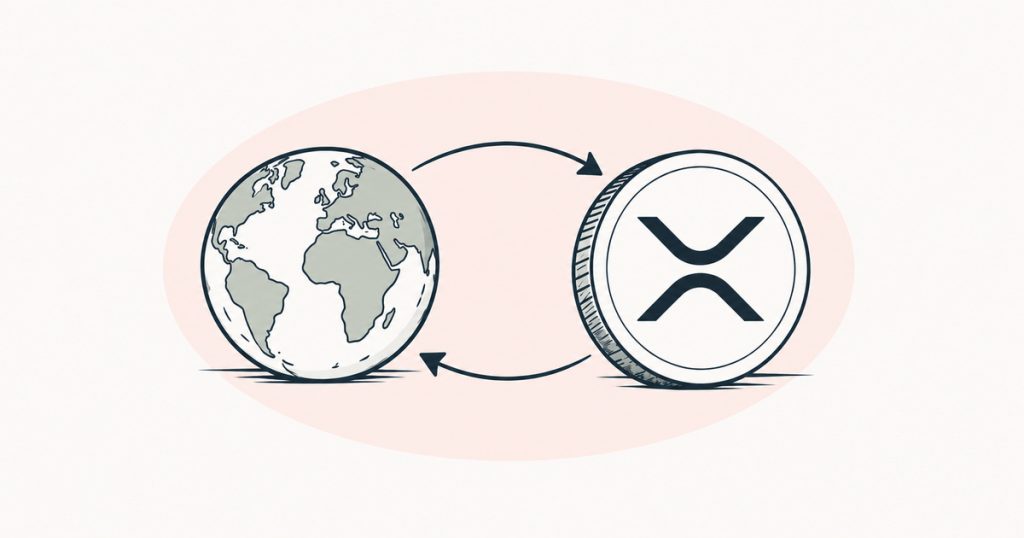
XRP is the coin of the XRP Ledger network, launched in 2012. The network was built for fast and cheap international transfers and settlements. Two things set XRP apart from Bitcoin right away. First: XRP is not mined — the entire supply of coins was created at launch (this is called a premine, when coins are made in advance rather than appearing gradually). Second: the network is secured not by a competition of computers and not by a deposit of coins, but by the agreement of trusted servers, where each one decides for itself which other servers it trusts. Closely tied to XRP is the company Ripple, which promotes it for payments.
The XRP Ledger network went live in June 2012, and its first developers were David Schwartz, Jed McCaleb and Arthur Britto2.
The network is secured not by a competition of computers and not by a deposit of coins, but by the agreement of trusted servers, and the XRP Ledger has its own way of doing this. Special servers, called validators, check with one another against a list of those they trust — this list is called the Unique Node List. Each server configures that list itself; there is no single “list of validators trusted by the whole network.” The agreement mechanism itself was first described in the technical document (whitepaper) by the network’s creators3, while the current description is in the network’s documentation1. This is discussed in the article what is consensus as an example of “besides mining and a deposit, it can be done differently too.”
XRP is not mined: the entire supply was created at launch, which is called a premine. A significant part went to the company Ripple, and much of it is held “under lock” on special accounts, called escrow, from which it is released gradually2. The exact figures and current distribution change.
It is important not to confuse the coin itself with the company beside it. XRP has a notable legal history: the case of the US securities regulator against the company Ripple, concluded by 2025. We do not retell it here and pass no verdicts, because it is examined in the company profile Ripple (company).
There are also exchange-traded funds for XRP, called ETFs: through such a fund you can get exposure to the price of XRP from an ordinary brokerage account, without buying the coin itself. Whether such funds for XRP appear — the status changes,.
Properties
- Fast cross-border transfers and settlements (the network's original intent)
XRP is not a stable coin: its price can rise and fall sharply. There was a significant legal history around it, that is something to look into in the company profile rather than to judge by the coin. As everywhere in crypto, keeping your coins safe is on you alone (what is a seed phrase, how to store crypto).